

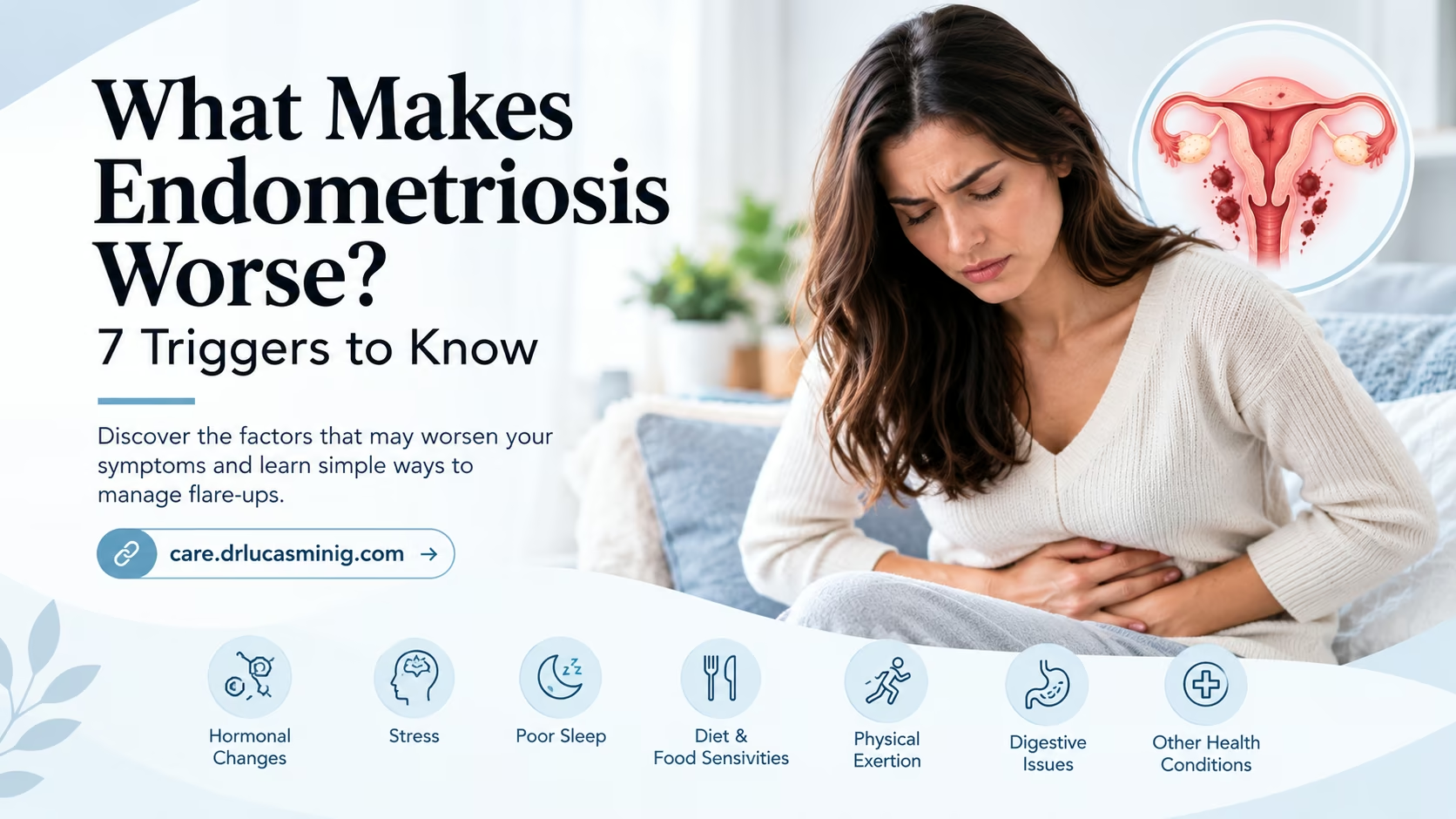
Living with endometriosis can feel unpredictable. You might have a few relatively comfortable days, followed by pelvic pain, bloating, fatigue, or painful periods that make everyday activities difficult. Sometimes, symptoms seem to worsen without an obvious reason.
So, what makes endometriosis worse? Hormonal changes during the menstrual cycle, individual pain triggers, poor sleep, stress, and certain digestive problems may contribute to worsening symptoms. However, these factors do not necessarily make endometriosis lesions grow or cause the disease to progress.
Understanding this distinction is important. Endometriosis is a complex, chronic condition, and the factors that influence symptoms can vary from person to person. Research can help explain some of these patterns, although evidence for many popular claims about endometriosis triggers remains limited.
In this guide, we will examine what medical research says about worsening endometriosis symptoms, which factors you can monitor, and when you should consider seeking specialist care.
Table of Contents
What Makes Endometriosis Symptoms Worse?
Endometriosis develops when tissue similar to the lining of the uterus grows outside the uterus. These growths can contribute to inflammation, scar tissue, and adhesions that may affect nearby pelvic organs.
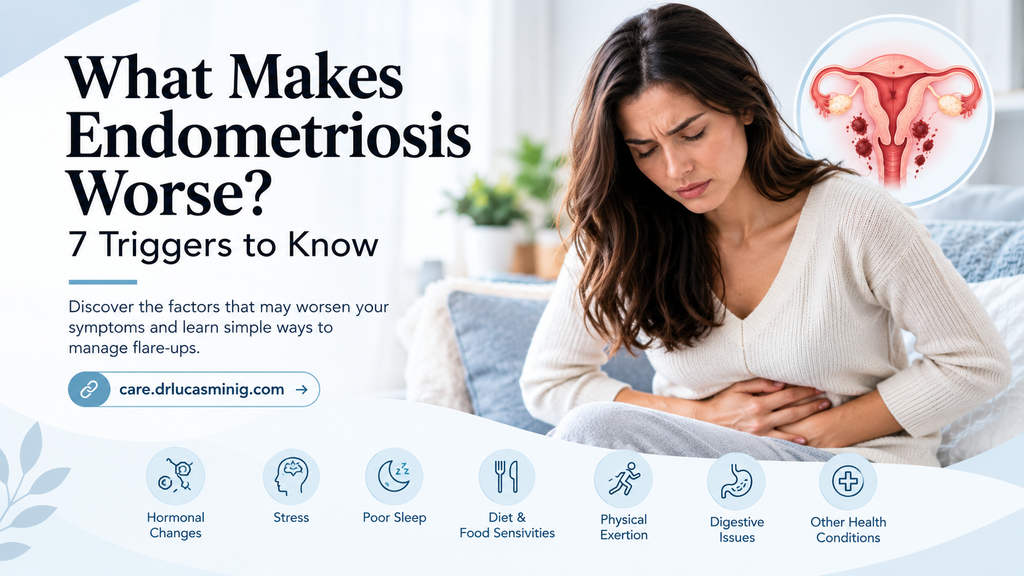
According to the World Health Organization, endometriosis can cause painful menstruation, chronic pelvic pain, fatigue, digestive symptoms, and fertility difficulties. Its symptoms can significantly affect physical health, emotional well-being, and quality of life.
However, there is no single trigger that makes symptoms worse for everyone.
Some people notice increased pain immediately before their periods. Others experience symptoms around ovulation, after certain activities, or alongside digestive problems. Some have flare-ups that appear unpredictable.
It is also important to distinguish between worsening symptoms and worsening disease. An increase in pain does not automatically mean that endometriosis lesions have grown or spread. Pain can change because of hormonal fluctuations, inflammation, pelvic floor muscle tension, or changes in how the nervous system processes pain.
The following factors may help explain why your symptoms sometimes become more difficult to manage.
Hormonal Changes During Your Menstrual Cycle
One of the most important factors to consider is your menstrual cycle.
Endometriosis is a hormone-responsive condition, and oestrogen plays a role in the activity of endometriosis tissue. Hormonal fluctuations throughout the menstrual cycle can influence symptoms in some people.
You may notice that pelvic pain, menstrual cramps, or lower back discomfort become more intense in the days before your period or during menstruation.
Why can periods make endometriosis pain worse?
Endometriosis-associated inflammation and changes in pain processing can contribute to painful periods. Menstruation can also involve uterine contractions, which may add to pelvic discomfort.
Some people experience pain that begins several days before bleeding starts and continues throughout their period. Others have pelvic pain at different points in the cycle.
However, not everyone with endometriosis experiences cyclical symptoms. Pain can persist between periods, and some people have relatively few noticeable symptoms despite having the condition.
The National Institutes of Health explains that the severity of endometriosis pain does not always correspond to the number, location, or extent of visible lesions. This is an important reminder that pain intensity alone cannot tell you whether the disease has progressed.
What can you do?
Track when your symptoms begin, how long they last, and how they relate to your menstrual cycle. If pain repeatedly becomes severe around menstruation or interferes with your daily activities, discuss it with your healthcare provider.
Treatment may include pain-relieving medication or hormonal therapy, depending on your diagnosis, medical history, and pregnancy plans.
Stress and Emotional Strain
Stress is another factor worth considering when exploring what makes endometriosis worse.
Living with chronic pelvic pain can be emotionally exhausting. You may worry about when the next flare-up will occur, whether you will be able to work comfortably, or how your symptoms might affect relationships and future pregnancy plans.
Stress can also influence sleep, muscle tension, and how the nervous system responds to pain. These effects may make existing symptoms more difficult to manage.
However, stress should not be blamed for causing endometriosis. The condition has complex biological mechanisms, and experiencing anxiety or emotional strain does not mean that you have caused your illness.
What does the research say about stress and endometriosis?
A systematic review published in 2022 examined 27 studies involving 5,419 women with endometriosis.
The researchers found that anxiety and pain catastrophizing were among the factors most consistently associated with greater pain. Anxiety, depression, and stress were also associated with poorer health-related quality of life.
You can read the study, Psychosocial factors associated with pain and health-related quality of life in Endometriosis: A systematic review, on PubMed.
These findings show an association between psychological factors and the experience of endometriosis. They do not establish that stress directly causes lesions to grow or that reducing stress will eliminate the disease.
What can you do?
Consider manageable ways to reduce everyday strain, such as gentle breathing exercises, relaxation techniques, appropriate physical activity, or speaking with a mental health professional.
If pain or anxiety is affecting your quality of life, psychological support can complement medical treatment. It should never be used to dismiss your symptoms or replace appropriate gynecological care.
Poor Sleep and Persistent Fatigue
Sleep problems can become part of a difficult cycle when you have endometriosis.
Pelvic pain may make it difficult to fall asleep, wake you during the night, or prevent you from finding a comfortable position. After several nights of disrupted sleep, you may feel more exhausted and find it harder to cope with pain.
Fatigue is also a symptom reported by people with endometriosis. It can occur alongside pain, sleep disturbances, heavy menstrual bleeding, and other health problems.
Is there a connection between sleep and endometriosis?
A systematic review published in 2024 examined the relationship between sleep disturbances and endometriosis.
The review found evidence of an association between the two, although the researchers emphasized that further studies are needed to clarify the relationship and identify effective interventions.
Read the research on PubMed.
The findings do not prove that poor sleep causes endometriosis to progress. Instead, sleep disturbances may be part of the broader burden of living with chronic pain, and inadequate rest can make daily symptom management more challenging.
What can you do?
Try to maintain a consistent sleep schedule, create a comfortable sleeping environment, and discuss persistent nighttime pain with your healthcare provider.
If fatigue is severe or continues despite adequate rest, ask whether other factors need investigation. Iron-deficiency anemia, thyroid problems, sleep disorders, and other medical conditions can also cause tiredness.
You should not assume that every episode of fatigue is caused by endometriosis.
Certain Foods and Digestive Problems
Diet is one of the most discussed subjects among people looking for ways to manage endometriosis symptoms.
You may have heard that sugar, gluten, dairy products, caffeine, or processed foods make endometriosis worse. Some people report that particular foods are followed by increased bloating, abdominal discomfort, constipation, or diarrhea.
However, there is no strong evidence that one particular food universally triggers endometriosis or causes its lesions to grow.
Can food trigger an endometriosis flare-up?
It is possible that certain foods worsen symptoms for an individual, especially when digestive problems occur alongside endometriosis.
For example, someone who has endometriosis and irritable bowel syndrome may experience more bloating or abdominal pain after eating foods that trigger their bowel symptoms.
In that situation, the food may aggravate digestive discomfort without necessarily worsening the underlying endometriosis.
A systematic review published in 2022 evaluated dietary interventions and pain perception in women with endometriosis. It identified six eligible studies, and all reported some improvement in pain perception following the dietary interventions examined.
However, the studies differed in their methods, dietary approaches, and outcome measurements. Much of the evidence came from non-randomized research, which limits the conclusions that can be drawn.
The review is available on PubMed.
The evidence is therefore promising in some areas but insufficient to recommend one specific diet for everyone with endometriosis.
Should you avoid gluten, dairy, or sugar?
Not automatically.
Unless you have a diagnosed allergy, intolerance, or another medical reason to avoid a food, removing entire food groups may be unnecessary.
Instead, keep a food and symptom diary. Record what you eat, when symptoms occur, and whether the same pattern appears repeatedly.
If you suspect a specific food is causing problems, a registered dietitian can help you assess the pattern and make appropriate dietary adjustments without compromising nutrition.
Be particularly cautious about restrictive diets promoted as cures for endometriosis. No diet has been established as a cure for the condition.
Physical Activity That Exceeds Your Current Tolerance
Exercise can support general health, sleep, mobility, and emotional well-being. However, people with endometriosis may find that some physical activities temporarily increase their discomfort.
For example, high-impact exercise, intense abdominal workouts, or activities involving repeated pelvic movement may feel uncomfortable during a flare-up.
This does not mean that exercise is inherently harmful or that physical activity makes endometriosis lesions grow.
The effect depends on the individual, the type of activity, symptom severity, and other conditions that may contribute to pain.
Should you stop exercising if you have endometriosis?
Not necessarily.
Some people find gentle walking, stretching, swimming, or other low-impact activities more comfortable than intense workouts. Others can continue their usual exercise routine with minor adjustments.
The goal is to find an activity level that supports your health without repeatedly provoking significant symptoms.
During a flare-up, you may need to reduce intensity, take breaks, or choose a different activity. Gradually returning to exercise as symptoms settle may be more manageable than pushing through severe pain.
If movement consistently causes substantial pelvic pain, consider discussing it with your healthcare provider or a physiotherapist experienced in pelvic health.
Pelvic floor muscle tension can contribute to pelvic pain in some people, and a qualified physiotherapist may help identify whether this is part of your symptoms.
Changes in Daily Routine, Dehydration, and Overexertion
Sometimes, worsening symptoms coincide with a particularly demanding week.
You may have slept poorly, skipped meals, spent long hours sitting, travelled, or taken on more physical activity than usual. These circumstances can affect your energy levels and make existing pain more difficult to manage.
However, it is important not to assume that every lifestyle change directly affects the endometriosis itself.
For example, dehydration may contribute to headaches, constipation, or general discomfort. Constipation can be especially troublesome if you already experience bowel-related pelvic pain.
Similarly, doing more than your body currently tolerates may leave you feeling exhausted and uncomfortable, even though the activity has not necessarily worsened the underlying disease.
How can you identify your personal triggers?
Rather than following a long list of restrictions, look for patterns in your own experience.
Record your pain, menstrual cycle, sleep, meals, activity levels, and other symptoms for several weeks. Note whether a particular circumstance repeatedly precedes a flare-up.
One difficult day does not prove that a specific food, activity, or stressful event caused your symptoms. Repeated patterns provide more useful information.
The goal is to understand what may influence your symptoms while maintaining a balanced routine.
Inadequate Treatment or Another Underlying Condition
If your endometriosis symptoms are becoming more severe, it is important to consider whether your current treatment plan is working.
Endometriosis symptoms may persist despite treatment, and some people need adjustments to their medical care. Others may have a condition in addition to endometriosis that contributes to their symptoms.
For example, adenomyosis, ovarian cysts, pelvic floor dysfunction, irritable bowel syndrome, and bladder pain conditions can cause symptoms that overlap with endometriosis.
Heavy menstrual bleeding may also contribute to iron-deficiency anemia, which can worsen fatigue and weakness.
Does worsening pain mean that endometriosis is spreading?
Not necessarily.
A change in pain does not automatically mean that endometriosis lesions have grown, spread to another organ, or become more extensive.
Pain can be influenced by inflammation, nerve sensitivity, muscle tension, menstrual changes, and overlapping conditions. In some cases, the underlying disease may also require reassessment.
If your pain becomes more frequent, your usual treatment stops helping, or you develop new symptoms, arrange a medical review.
Your clinician can assess whether the current diagnosis remains the best explanation, whether further investigations are needed, and whether treatment should be changed.
Do not increase medication doses or discontinue prescribed treatment without appropriate medical advice.
How Can You Manage Endometriosis Flare-Ups?
Although you cannot control every aspect of endometriosis, you can take practical steps to understand your symptoms and work with your healthcare team.

Consider the following strategies.
- 1. Keep a symptom diary. Record your menstrual cycle, pain severity, digestive symptoms, sleep, activities, and medication use. This can help identify recurring patterns.
- 2. Follow an individualized treatment plan. Depending on your circumstances, your clinician may recommend pain-relieving medication, hormonal treatment, further investigations, or surgery.
- 3. Prioritize restorative sleep. A consistent sleep routine may support your general well-being and make persistent symptoms easier to manage.
- 4. Adjust activities when necessary. Gentle movement may be helpful, but you do not need to force yourself through severe pain. Adapt your activity to your current tolerance.
- 5. Eat a balanced diet. Focus on adequate nutrition rather than automatically eliminating foods because they are discussed online as possible triggers.
- 6. Seek help for persistent stress or emotional difficulties. Psychological support can be useful alongside medical care, particularly when chronic pain affects your quality of life.
- 7. Review symptoms that are changing. If flare-ups become more severe or frequent, speak with your healthcare provider instead of assuming that the changes are unavoidable.
These measures can support symptom management, but they do not replace diagnosis or treatment. No lifestyle strategy is guaranteed to prevent every flare-up.
When Should You See an Endometriosis Specialist?
You should consider a gynecological assessment if period pain repeatedly disrupts daily life, pelvic pain continues between periods, or you experience pain during sex, bowel movements, or urination.
Specialist assessment may also be appropriate if symptoms persist despite initial treatment, you have suspected deep endometriosis, or your condition may involve the bowel, bladder, or other nearby organs.
Seek urgent medical attention if you experience sudden or severe pelvic pain, fainting, heavy bleeding accompanied by weakness or dizziness, or other symptoms that suggest an acute medical problem. These symptoms should not automatically be attributed to endometriosis.
Dr. Lucas Minig provides individualized endometriosis care in Valencia, Spain, including specialist assessment and minimally invasive gynecological surgery when appropriate.
If your symptoms are persistent or complex, you can explore the clinic’s endometriosis treatment services to learn more about available approaches.
The most appropriate treatment depends on your symptoms, the location and extent of the disease, previous treatment, medical history, and fertility goals. Surgery may be appropriate in selected cases, but it is not automatically necessary for every patient.
A specialist can help you understand the available options and decide on a plan that reflects your individual circumstances.
Conclusion
What makes endometriosis worse? Hormonal changes, stress, poor sleep, individual dietary triggers, physical overexertion, and overlapping health conditions may all contribute to worsening symptoms in some people. However, these factors do not necessarily make endometriosis lesions grow or cause the disease to progress.
The research is strongest in showing that endometriosis symptoms are complex and can be influenced by multiple biological, psychological, and lifestyle factors. Evidence for specific food triggers and other lifestyle interventions remains limited, so avoid treating unproven claims as universal medical advice.
Start by tracking your symptoms, making manageable adjustments to your routine, and following an individualized treatment plan. If pain becomes more severe, persistent, or difficult to manage, seek medical advice.
You do not have to accept debilitating pain as a normal part of menstruation. Appropriate assessment and personalized care can help you understand your symptoms and explore ways to improve your quality of life.
FAQ’s
What makes endometriosis pain worse?
Endometriosis pain may worsen around menstruation, and some people experience increased discomfort alongside poor sleep, stress, digestive symptoms, or particular activities. However, triggers vary between individuals, and these factors do not necessarily cause the disease to progress. Tracking your symptoms can help you identify patterns and discuss appropriate management options with your healthcare provider.
Can stress make endometriosis worse?
Stress may contribute to greater pain sensitivity and poorer quality of life in people with endometriosis. Research has found associations between psychological factors, including anxiety and stress, and the experience of pain. However, stress has not been established as a direct cause of endometriosis or its progression. Stress-management techniques may support overall well-being alongside appropriate medical care.
What foods should you avoid if you have endometriosis?
There is no universally recommended list of foods that everyone with endometriosis must avoid. Some people report digestive symptoms after particular foods, but evidence that specific foods directly worsen endometriosis is limited. A balanced diet and symptom diary may help you identify personal patterns. Consult a registered dietitian before making major dietary restrictions, especially if you have multiple digestive symptoms.
Does endometriosis get worse over time?
Endometriosis symptoms can persist, fluctuate, or become more severe, but the course varies between individuals. Worsening pain does not automatically mean that the disease has progressed, and symptom severity does not always correspond to the extent of visible lesions. If symptoms change significantly or treatment becomes less effective, arrange a medical assessment to determine whether further investigation or a treatment adjustment is needed.
How can I stop an endometriosis flare-up?
There is no guaranteed way to prevent every endometriosis flare-up. Tracking your symptoms, following your prescribed treatment, maintaining a manageable activity routine, prioritizing sleep, and identifying individual triggers may help you manage symptoms. If flare-ups are frequent, severe, or increasingly disruptive, consult your healthcare provider to review your diagnosis and treatment options.


