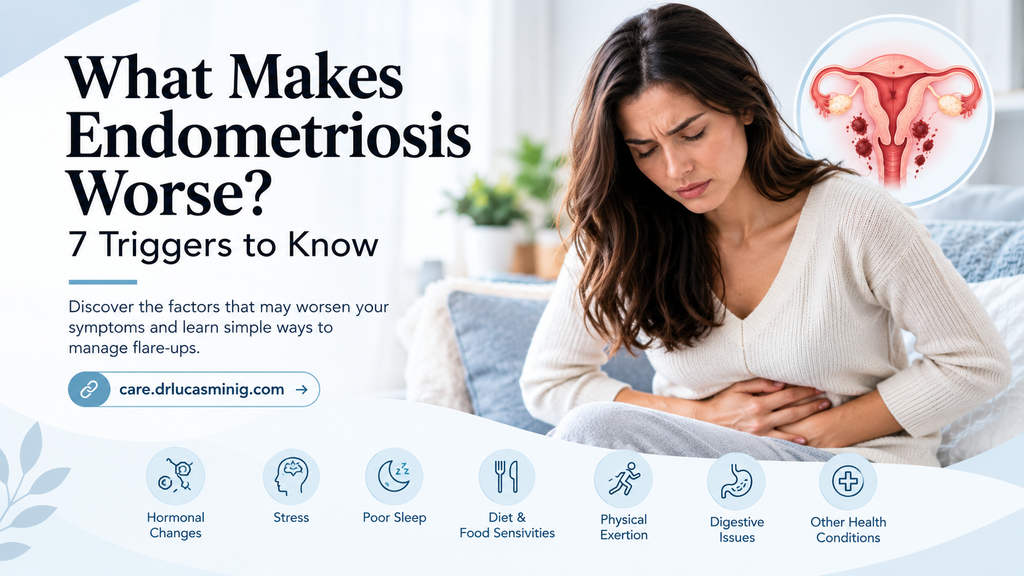
Living with endometriosis can make even a simple workout feel complicated. You might want to go for a run, join a fitness class, or lift weights, but pelvic pain, fatigue, and bloating can leave you wondering whether exercise will help or make things worse.
So, does working out help endometriosis?
Exercise may help some people manage their symptoms and maintain their physical and emotional well-being, but research has not established that it reliably reduces endometriosis-related pain in everyone. The right approach depends on your symptoms, fitness level, pelvic health, and how your body responds to movement.
Exercise is not a cure for endometriosis, and you do not have to push through pain to benefit from physical activity. A thoughtful plan can help you stay active without turning every workout into another challenge.
Let’s look at what the research says, which exercises you might consider, and how to approach movement safely when you have endometriosis.
Does Working Out Help Endometriosis?
Yes, exercise may help some people with endometriosis, particularly as part of a broader approach to managing pain and maintaining quality of life. However, the evidence is still uncertain, and there is no single workout proven to work for everyone.
Physical activity can support general health, mobility, mood, and cardiovascular fitness. Some people also find that gentle movement helps them feel less stiff or more comfortable during certain stages of their menstrual cycle.
But there is an important distinction between feeling better after exercise and treating the disease itself.
Endometriosis occurs when tissue similar to the lining of the uterus grows outside the uterus. These lesions can contribute to inflammation, scar tissue, adhesions, and persistent pelvic pain. Exercise has not been shown to remove these lesions or cure the condition.
According to the World Health Organization’s endometriosis fact sheet, the disease affects approximately 190 million women of reproductive age worldwide. Its symptoms can interfere with daily activities, relationships, mental health, and fertility.
The goal of exercise, therefore, is not to force your body into behaving normally. It is to find forms of movement that support your health without aggravating your symptoms.

What Does Scientific Research Say About Exercise and Endometriosis?
If you have searched online for the benefits of exercise for endometriosis, you have probably encountered confident claims about reduced inflammation, balanced hormones, and fewer painful periods.
Some of these ideas may sound reasonable, but what does clinical research actually show?
The evidence is mixed, and newer studies make it particularly important to avoid promising too much.
What the Latest 2026 Research Found
A systematic review and meta-analysis published in BMC Psychology on October 1, 2026, examined randomized trials of structured exercise in people with endometriosis.
The researchers included six independent trials, with five contributing quantitative data to the analyses. For overall endometriosis-related pain, four trials involving 271 participants were included.
The review concluded:
“Current randomised evidence does not establish a clinically important benefit of structured exercise for endometriosis-associated pain or the wider symptom burden.”
The authors rated the certainty of evidence as very low. The studies were relatively small, results varied, and the reporting of potential harms was inconsistent.
This does not mean exercise is useless. It means the available trials cannot establish how much benefit people with endometriosis should expect from structured exercise, or whether the same results apply to everyone.
Read the full study: Effects of structured exercise training on pain and multidimensional symptom burden in women with endometriosis — BMC Psychology, 2026.
What Earlier Studies Suggest About Exercise and Pain
A systematic review published in PLOS ONE in February 2025 examined six randomized controlled trials involving 251 participants.
The researchers reported potential improvements in quality of life, including pain-related functioning and emotional well-being. However, they also highlighted limitations in the evidence, such as differences between studies, incomplete reporting, and short follow-up periods.
Another randomized trial, published in the Journal of Physiotherapy in October 2025, examined supervised exercise combined with pelvic floor muscle training alongside multidisciplinary pain management. It reported improvements in current pelvic and genital pain but did not establish an improvement in the participants’ worst pain.
These findings suggest that certain exercise and physiotherapy programs may help some people, but they do not prove that exercise consistently reduces all types of endometriosis pain.
Sources: 2025 PLOS ONE systematic review and 2025 randomized trial in the Journal of Physiotherapy.
The practical takeaway? Exercise is worth considering as part of an individualized care plan, but it should not replace treatments that address your specific symptoms or disease.
How Can Exercise Help Someone With Endometriosis?
Although the research does not establish a reliable, disease-specific effect on pain, physical activity can still have a place in everyday health management.
The important thing is to understand what exercise may realistically offer.
Supporting Pain Management and Mobility
Chronic pelvic pain can make you tense your abdominal, hip, and lower-back muscles without even realizing it. Over time, this protective tension may contribute to stiffness and make ordinary movements uncomfortable.
Gentle movement can help you maintain mobility and explore positions that feel more comfortable. Walking, light stretching, and appropriately selected physiotherapy exercises are possible starting points.
Exercise can also stimulate the body’s natural pain-modulating systems. However, this general physiological effect should not be interpreted as proof that working out specifically reduces endometriosis lesions or reliably controls endometriosis-related pain.
If pain during movement is persistent or severe, a healthcare professional can help determine whether other factors, including pelvic floor dysfunction, need attention.
Improving Mood, Sleep, and Overall Well-Being
Endometriosis affects more than the pelvis. Living with unpredictable symptoms can influence sleep, relationships, work, confidence, and mental health.
Physical activity may support mood, sleep quality, cardiovascular health, and general fitness. For some people, a short walk or gentle movement session can provide a welcome break from sitting or worrying about symptoms.
You do not need an intense workout for activity to count. Ten comfortable minutes can be a reasonable starting point when your energy is limited.
Just remember that fatigue associated with endometriosis may have several contributing factors. Exercise is not a guaranteed solution, and persistent exhaustion deserves medical assessment rather than an increasingly demanding workout plan.
Why Exercise Cannot Cure Endometriosis
It is worth being clear about this point because online advice sometimes blurs the difference between symptom relief and disease treatment.
Exercise has not been established as a way to:
- Remove endometriosis lesions or pelvic adhesions.
- Shrink ovarian endometriomas.
- Prevent the progression of endometriosis.
- Eliminate the need for medication or surgery.
- Restore fertility by itself.
Endometriosis management may involve pain-relieving medication, hormonal therapy, surgery, pelvic health support, or a combination of approaches. The appropriate options depend on your symptoms, medical history, reproductive goals, and preferences.
Lifestyle changes can complement medical care, but they should not be presented as substitutes for it.
What Are the Best Exercises for Endometriosis?
There is no universally proven best exercise for endometriosis. The most appropriate activity is one that suits your current health, does not consistently aggravate your symptoms, and fits comfortably into your routine.
Rather than following someone else’s demanding fitness schedule, start by exploring different types of movement.
Walking and Other Low-Impact Cardio
Walking is often a practical starting point because you can control your pace, duration, and route.
You might begin with five to ten minutes on a flat surface and increase the duration gradually if you feel comfortable. Swimming, gentle cycling, and water-based exercise are other options that some people find easier to tolerate than high-impact activities.
Low-impact exercise can support general fitness without requiring intense jumping or repeated heavy loading.
However, low-impact does not automatically mean pain-free. If walking or cycling increases your pelvic pain, reduce the intensity, try a shorter session, or stop and reassess what your body is telling you.
Gentle Yoga, Pilates, and Stretching
Gentle yoga and modified Pilates can help you explore breathing, body awareness, flexibility, and controlled movement.
Some people find these practices useful for relaxation and reducing unnecessary muscular tension. Others may discover that deep stretches, particular abdominal exercises, or certain poses aggravate their symptoms.
Choose movements that feel comfortable rather than forcing your body into a position because an instructor describes it as beneficial for endometriosis.
You can also modify traditional exercises. For example, if a demanding core workout creates pelvic pressure, you might try supported movements or gentle mobility work instead.
There is no need to treat flexibility as a fitness goal in itself. Comfort and control matter more than how far you can stretch.
Strength Training With Endometriosis
You do not automatically need to avoid weights if you have endometriosis.
Strength training can support muscle function, bone health, and everyday activities. Depending on your symptoms, you may be able to continue resistance exercises with lighter loads, controlled movements, and sufficient rest.
If lifting increases pelvic pressure or causes a significant pain flare, modify the exercise rather than trying to push through it. Consider reducing the weight, repetitions, or range of motion.
Heavy lifting is not inherently forbidden for everyone with endometriosis, but neither is it necessary for symptom management.
If you have deep endometriosis, significant pelvic pain, an ovarian endometrioma, or a recent operation, discuss activity restrictions with your clinician where appropriate. Following surgery, your surgeon’s recovery instructions should take priority over a general exercise routine.
Pelvic Floor Physical Therapy
Pelvic floor physical therapy deserves special attention because pelvic pain does not always come from weak muscles.
Some people with endometriosis develop pelvic floor overactivity or muscle tension. In those cases, repeatedly performing strengthening exercises, such as Kegels, without an assessment may be unhelpful or aggravating.
A trained pelvic health physiotherapist can assess muscle function and determine whether you may benefit from relaxation techniques, breathing exercises, manual therapy, coordination work, or strengthening.
Treatment should reflect what the assessment finds rather than assuming everyone needs the same exercises.
For persistent pelvic pain, this individualized approach may be more appropriate than simply following a generic workout video.

Can Working Out Make Endometriosis Symptoms Worse?
Yes. Some people experience more pain or discomfort after exercise, particularly when a session is too intense for their current tolerance.
This does not necessarily mean exercise is damaging the endometriosis lesions. Pain can be influenced by several factors, including muscular tension, fatigue, bowel symptoms, the menstrual cycle, and individual sensitivity to movement.
You may notice more discomfort after running, jumping, heavy lifting, or exercises that involve repeated abdominal bracing. Another person with endometriosis may tolerate the same activities without a problem.
Pay attention to your own pattern.
For example, if a long run regularly leaves you with significant pelvic pain for the rest of the day, try shorter sessions or a different activity. If gentle stretching feels comfortable but deep abdominal exercises do not, adjust your routine accordingly.
A useful principle is to avoid treating pain as something you must overcome to prove that you are exercising correctly.
If exercise consistently causes significant pain, worsening symptoms, or prolonged recovery, discuss it with a healthcare professional. New, severe, or unusual pain should not automatically be attributed to endometriosis.
How to Exercise Safely With Endometriosis
The best exercise routine is one you can adapt as your symptoms change. Endometriosis is not always predictable, so your activity level may need to vary from one day to the next.
Start Slowly and Adjust Your Intensity
If you are returning to exercise after a break, begin below your maximum capacity.
A few short sessions may be easier to tolerate than one long workout. Increase duration or intensity gradually, changing one factor at a time so that you can identify what works for you.
During and after exercise, pay attention to pelvic pain, fatigue, bloating, dizziness, and your recovery time.
You can keep a simple activity diary to record what you did, how you felt during the session, and whether symptoms changed later that day or the following morning. This can reveal useful patterns without requiring you to track every detail of your health.
Remember that your capacity may fluctuate. Resting when you need to is part of a sensible fitness plan, not a failure to follow one.
What to Do During an Endometriosis Flare-Up
On a difficult symptom day, your usual workout may not be appropriate.
You could try a short, gentle walk, comfortable breathing exercises, or supported movement if these activities feel manageable. You may also decide that rest is the better option.
Do not force yourself to complete a scheduled workout simply because it appears on your calendar.
If you experience severe pelvic pain, fainting, fever(cause by endometriosis), persistent vomiting, or unusually heavy bleeding, seek prompt medical assessment rather than attempting to exercise through the symptoms. Sudden, severe pelvic pain warrants urgent evaluation, particularly if pregnancy is possible.
An Example of a Gentle Exercise Routine
The following is an illustrative starting point, not a medically tested endometriosis treatment plan.
- Minutes 1–3: Walk slowly indoors or outdoors, provided walking feels comfortable.
- Minutes 4–6: Try gentle shoulder movements, relaxed breathing, and comfortable trunk mobility.
- Minutes 7–10: Continue walking at an easy pace or finish with supported stretching.
Stop or modify any movement that causes significant discomfort. You can shorten this routine further or skip it entirely during a flare-up.
If even gentle activity consistently aggravates your symptoms, seek individualized guidance before attempting to increase your exercise level.
Is Exercise Enough to Treat Endometriosis?
For most people who need treatment for confirmed endometriosis, exercise alone is not enough.
Treatment depends on the nature of the disease and how it affects daily life. Some people benefit from pain-relieving medication or hormonal treatments. Others may need further investigation or surgery, especially when symptoms remain severe or the disease affects organs such as the bowel, bladder, or ureters.
The UK’s National Institute for Health and Care Excellence (NICE) has highlighted the historical lack of high-quality evidence for lifestyle interventions specifically intended to reduce endometriosis symptoms. Its guidance also emphasizes individualized decisions based on symptoms and patient preferences.
You can read the NICE guideline on endometriosis: diagnosis and management.
Exercise may be one part of managing endometriosis, alongside appropriate medical treatment, sleep, psychological support, and pelvic health care. It should not become another source of guilt when symptoms prevent you from being active.
When Should You Speak to an Endometriosis Specialist?
Consider seeking specialist advice if pelvic pain interferes with work, sleep, exercise, relationships, or your ability to carry out everyday activities. The same applies if symptoms persist despite treatment, painful periods become increasingly difficult to manage, or you have concerns about fertility.
A specialist can assess whether your symptoms may be associated with deep endometriosis, ovarian endometriomas, pelvic floor dysfunction, or another condition requiring attention.
For patients seeking care in Spain, Dr. Lucas Minig in Valencia provides endometriosis assessment and individualized treatment. His clinic describes medical management, pelvic floor physical therapy, multidisciplinary support, fertility counseling, and minimally invasive surgery for appropriate cases.
The goal of an assessment is not to assume that surgery is necessary. It is to understand the condition, consider available treatment options, and develop a plan that reflects the patient’s symptoms and goals.
You can learn more about the clinic’s approach on the endometriosis treatment options.
If you live outside Spain, the clinic also provides information for international patients seeking consultation or a second opinion. Your local gynecologist can remain an important part of your ongoing care.

Conclusion
So, does working out help endometriosis? It may help some people maintain their fitness, mobility, and overall well-being, but current research has not established that structured exercise reliably reduces endometriosis-related pain for everyone.
Walking, gentle yoga, adapted strength training, and pelvic floor physical therapy are options worth discussing or exploring according to your symptoms and individual needs. Equally, resting or modifying your routine during a flare-up is a reasonable choice.
You do not need to force yourself through pain, and you should not expect exercise to cure endometriosis. Use movement as one possible part of your care plan, and seek professional guidance when symptoms persist or interfere with daily life.
The aim is to find an approach that supports your health while respecting what your body can comfortably manage.
FAQ’s
1. What Is the Best Exercise for Endometriosis?
There is no single exercise proven best for everyone with endometriosis. Walking, gentle yoga, swimming, modified strength training, and pelvic floor physical therapy may be appropriate depending on your symptoms, fitness level, and individual tolerance.
2. Can Exercise Shrink Endometriosis Lesions?
No. Current evidence has not established that exercise shrinks or removes endometriosis lesions. Physical activity may support general health and symptom management, but medical treatment may be needed to manage the disease itself.
3. Should I Exercise During an Endometriosis Flare-Up?
Only if the activity feels manageable. Gentle movement may suit some people during a flare-up, while others need rest. Avoid forcing yourself through significant pain, and seek medical advice if symptoms are severe or unusual.
4. Is Walking Good for Endometriosis?
Walking is a practical, low-impact activity that may help you maintain mobility and general fitness. Start with a comfortable duration and adjust your pace according to your symptoms. Walking is not a proven treatment for endometriosis lesions.
5. Can Exercise Help With Endometriosis Bloating and Fatigue?
Exercise may support general well-being, but it has not been established as a reliable treatment for endometriosis-related bloating or fatigue. Persistent symptoms should be assessed by a healthcare professional because they may have several contributing causes.