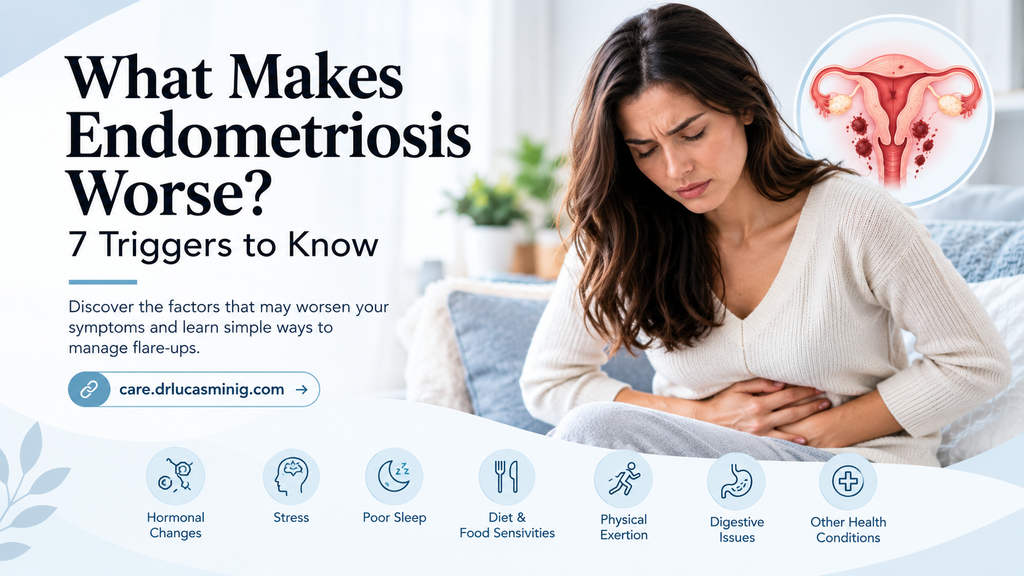
Have you ever wondered whether a stressful job, a difficult period in your life or months of anxiety could have caused your endometriosis? It is a reasonable question, especially when your pelvic pain seems to get worse during stressful periods.
The relationship between stress and endometriosis is complicated. Researchers have explored how psychological stress, inflammation, the nervous system and chronic pelvic pain may interact. However, there is an important distinction between stress affecting your symptoms and stress actually causing the disease.
So, can stress cause endometriosis? Current medical evidence does not establish stress as a direct cause of endometriosis in humans. The exact causes remain unknown, although researchers are investigating several genetic, hormonal, immune and biological factors. Studies suggest that stress may influence pain perception and symptom burden, while living with endometriosis can itself contribute to anxiety and emotional distress.
Understanding this relationship can help you make informed decisions about symptom management without blaming yourself for developing a medical condition.
Can Stress Cause Endometriosis?
The straightforward answer is that there is currently no convincing evidence proving that psychological stress directly causes endometriosis.
According to the World Health Organization (WHO), “The causes of endometriosis are unknown.”

Endometriosis occurs when tissue similar to the lining of the uterus grows outside the uterus. These lesions can trigger inflammation and the formation of scar tissue or adhesions. Depending on their location and the individual’s circumstances, they may contribute to painful periods, chronic pelvic pain, painful intercourse, bowel or urinary symptoms, and fertility difficulties.
Researchers have proposed several explanations for how endometriosis develops. These include genetic susceptibility, immune-system differences, hormonal influences and changes in the way certain cells develop or behave. No single explanation accounts for every case.
Stress is also being investigated as a possible influence on disease-related biological processes. However, finding a connection between stress and endometriosis does not automatically mean one causes the other.
For example, a person may experience severe stress before receiving an endometriosis diagnosis. That timing alone cannot establish that stress produced the disease. The condition may have been developing long before the first noticeable symptoms appeared.
Most importantly, endometriosis is not your fault. Experiencing anxiety, going through a difficult life event or struggling to manage everyday pressures does not mean you caused the condition.
What Does Research Say About Stress and Endometriosis?
Scientists have examined the relationship between psychological stress and endometriosis through observational studies, systematic reviews and laboratory experiments. Their findings suggest a meaningful connection, but important questions remain unanswered.
What Human Studies Tell Us
People living with endometriosis frequently report emotional distress, particularly when they experience persistent pain, disrupted sleep, fertility concerns or difficulty obtaining a diagnosis.
A 2019 systematic review and meta-analysis published in Minerva Medica examined 15 studies involving 4,619 women with endometriosis. The researchers estimated that approximately 68% of participants experienced mild or high levels of psychological stress.
However, the analysis reported considerable variation between studies. The findings show that stress is common among people with endometriosis, but they do not show that stress caused the disease.
You can read the published systematic review and meta-analysis on PubMed.
A separate 2020 review, published in Reproductive Sciences, explored whether stress is a cause or a consequence of endometriosis. The authors explained that “it is unknown whether chronic stress represents a primary cause of endometriosis.”
The review also discussed experimental findings suggesting that stress may influence disease-related processes. Nevertheless, the researchers emphasized the need for further investigation to determine how these findings apply to humans.
Read the 2020 review on PubMed.
These findings are important because they prevent us from jumping to conclusions. High stress levels may be associated with endometriosis, but the association does not establish that stress initiates the disease.
What Animal Studies Reveal
Some experimental research has explored what happens when animals with induced endometriosis are exposed to stress.
For instance, a 2020 study published in Fertility and Sterility investigated the relationship between psychological stress and the progression of endometriosis lesions in mice. The researchers observed findings suggesting that stress could influence lesion development and inflammatory activity in this experimental setting.
You can explore the research through PubMed’s study record.
These findings offer researchers useful clues about potential biological mechanisms. They do not, however, demonstrate that stress causes endometriosis in women or other people who can develop the condition.
Why Animal Research Does Not Prove Human Causation
Animal experiments allow scientists to investigate biological processes under controlled conditions. Human endometriosis is considerably more complex, involving differences in genetics, hormonal responses, immune function, environmental exposures and individual pain experiences.
A biological process observed in an animal model may not operate in the same way in humans.
For this reason, researchers must combine laboratory findings with well-designed human studies before drawing firm conclusions about disease causation.
The current evidence supports further research into stress and endometriosis, not the claim that stress is a proven cause.
Can Stress Make Endometriosis Symptoms Worse?
Although stress has not been established as a direct cause of endometriosis, it may affect how some people experience and manage their symptoms.
Have you noticed that your pelvic pain feels harder to tolerate during a demanding week? Perhaps you sleep poorly, feel constantly tense or find that your usual coping strategies no longer seem to help.
These experiences deserve attention. They do not necessarily mean that stress has increased the number of endometriosis lesions or made the underlying disease more severe.
The Relationship Between Stress and Pain
Pain is influenced by more than the physical condition of a particular tissue. The nervous system also determines how pain signals are processed and experienced.
When you feel threatened or overwhelmed, your body activates its stress-response systems. You may notice faster breathing, tense muscles, disrupted concentration or difficulty relaxing. These responses can affect your experience of existing pain.
Chronic pain can also lead to increased sensitivity within the nervous system. This process, commonly discussed in the context of pain sensitization, may contribute to persistent or amplified pain in some people.
For someone with endometriosis, several factors may therefore interact:
- Pelvic inflammation: Endometriosis lesions can contribute to local inflammation and pain.
- Pain sensitivity: Changes in pain processing may influence how intensely discomfort is experienced.
- Emotional stress: Anxiety and ongoing pressure may make painful episodes more difficult to manage.
- Daily functioning: Pain can interfere with exercise, relationships, work and sleep, creating additional stress.
Research into the nervous system and endometriosis-associated pain supports the importance of considering both biological and psychological influences when developing a care plan.
This does not mean the pain is imaginary or simply caused by emotions. Endometriosis-related pain is real, and psychological stress does not invalidate a patient’s symptoms.
Sleep, Muscle Tension and Emotional Health
Stress can also influence everyday habits that affect your well-being.
You might struggle to fall asleep, wake frequently during the night or find it difficult to maintain a regular routine. Some people develop muscle tension around the abdomen, hips or pelvic floor, which may add to their discomfort.
Poor sleep can make it harder to cope with pain the following day. Pain can then interfere with sleep again, creating a frustrating cycle.
Emotional health matters, too. Persistent symptoms may cause worry about when the next flare-up will occur, whether you can finish your workday or how your condition may affect future pregnancy plans.
If stress and pain seem to affect one another, keeping a symptom diary may help you identify patterns. Record your pain, menstrual cycle, sleep quality, daily activities and stressful events over several weeks.
Patterns in your records can help you and your clinician discuss potential triggers and make more informed treatment decisions. They cannot independently establish the cause of a flare-up, but they can provide useful context.
Can Endometriosis Itself Cause Stress?
Yes. Living with endometriosis can be emotionally demanding, particularly when symptoms are persistent, unpredictable or difficult to treat.
Imagine planning your day around the possibility of severe menstrual cramps. You may worry about travelling, attending an important meeting, having sex or being able to concentrate at work. If you are also trying to conceive, uncertainty about fertility can add another layer of emotional pressure.
For some people, the path to diagnosis creates further frustration. Endometriosis symptoms can overlap with other conditions, and a person may need several appointments before receiving an explanation for their pain.
The WHO recognizes that endometriosis can affect mental health, including through anxiety and depression. It also highlights the effects of chronic pain, fatigue, infertility and social isolation on quality of life.
This means the relationship between stress and endometriosis may work in both directions. Stress may influence the experience of symptoms, while symptoms and the wider impact of the disease can contribute to psychological distress.
It is important not to turn this relationship into a reason to blame patients. Nobody should have to prove that they are sufficiently relaxed before their pain is taken seriously.
Instead, appropriate care should address the physical symptoms of endometriosis and any emotional difficulties that arise alongside them.
How to Manage Stress When You Have Endometriosis
Stress management cannot guarantee that endometriosis symptoms will improve, and it does not replace medical care. However, finding ways to manage stress may support your emotional well-being, daily functioning and ability to cope with chronic pain.

You do not need to change your entire lifestyle overnight. Small, practical adjustments may be easier to maintain.
Practical Ways to Support Your Well-Being
1. Create a realistic sleep routine.
Try maintaining a consistent bedtime and wake-up time when possible. A quieter evening routine may help you unwind. If pain repeatedly interrupts your sleep, discuss this with your healthcare professional rather than assuming you simply need to relax.
2. Choose movement that feels manageable.
Gentle walking, stretching, swimming or yoga may help some people feel less tense. Your comfort and symptom pattern should guide your choices. Stop or modify activities that worsen your pain, and seek professional advice if you are unsure which exercises are suitable.
3. Try breathing or relaxation exercises.
Slow breathing, guided relaxation and mindfulness may help you manage moments of anxiety. These approaches are tools for supporting well-being, not proven methods for preventing endometriosis or removing lesions.
4. Consider psychological support.
A psychologist or counsellor familiar with chronic pain can help you develop coping strategies and address anxiety, low mood or fear surrounding unpredictable symptoms. Psychological support should complement, not replace, appropriate gynecological assessment and treatment.
5. Accept support from people you trust.
Talking to a friend, family member or patient support group can make it easier to explain what you are experiencing. You may also find it helpful to discuss practical adjustments at work or home when symptoms interfere with daily activities.
6. Track your symptoms without becoming overly restrictive.
A symptom diary can help identify patterns involving menstruation, sleep, stress and activity. Remember that correlation is not proof of causation. Avoid eliminating entire food groups, abandoning important activities or blaming yourself for a painful episode based on a suspected trigger alone.
Why Stress Management Cannot Replace Medical Treatment
Relaxation techniques may improve your ability to cope with pain, but they are not established treatments for removing endometriosis lesions or curing the disease.
Depending on your symptoms, health history and reproductive goals, treatment may involve pain-relieving medicines, hormonal therapy, pelvic floor physiotherapy or surgery in selected cases.
The WHO also recognizes the value of multidisciplinary pain management, including physiotherapy and cognitive behavioural therapy, as part of care intended to address pain and quality of life.
The most appropriate approach is one that considers your individual circumstances rather than assuming there is a single solution for everyone.
When Should You See an Endometriosis Specialist?
You should consider a gynecological assessment if pelvic pain repeatedly interferes with your everyday life, your periods are severely painful, intercourse causes pain, or you experience persistent bowel or urinary symptoms around menstruation.
It is also worth seeking advice if you have difficulty conceiving and suspect that endometriosis may be contributing.
Do not assume these symptoms are simply the result of stress. Other gynecological, gastrointestinal and urinary conditions can produce similar symptoms, so an appropriate assessment is important.
Depending on your situation, the evaluation may include a detailed menstrual and medical history, a physical examination when appropriate, and imaging such as transvaginal ultrasound or MRI. Laparoscopy may be considered in selected cases, but surgery is not always required before treatment can begin.
A normal imaging result also does not necessarily exclude every form of endometriosis. Your clinician can explain what the findings mean in the context of your symptoms.
Seek urgent medical attention if you experience sudden, severe pelvic or abdominal pain, particularly with fainting, fever, persistent vomiting, heavy bleeding or a possibility of pregnancy.
Endometriosis Care With Dr. Lucas Minig in Valencia, Spain
Understanding the possible relationship between stress and endometriosis is one part of getting the care you need. If you experience persistent pain or suspect that you have endometriosis, specialist assessment can help clarify your options.
Dr. Lucas Minig is a gynecologic oncologist whose clinic in Valencia, Spain, offers endometriosis assessment and individualized treatment planning. The clinic describes medical management, minimally invasive surgical options for appropriate cases, and multidisciplinary support that includes pain management, nutritional guidance and psychological support.
Treatment decisions should depend on the individual’s symptoms, examination and imaging findings, previous treatment, and fertility goals. Surgery is not necessary for every patient, and the benefits and limitations of each option should be discussed with the treating specialist.
The clinic also provides information and consultation options for international patients who are considering travelling to Spain for specialist care.
You can explore the endometriosis diagnosis and treatment services offered by Dr. Lucas Minig to learn more about the available options.
The aim is not simply to manage stress in isolation, but to make sure that persistent symptoms receive appropriate medical attention while supporting your overall quality of life.
Conclusion
So, can stress cause endometriosis? Current evidence does not establish psychological stress as a direct cause of endometriosis in humans. Researchers are still investigating the disease’s origins and the possible effects of stress on inflammation, pain processing and symptom severity.
What we do know is that endometriosis can place a substantial emotional burden on people living with the condition. Stress management, adequate sleep, gentle movement and psychological support may help some individuals cope with symptoms, but they cannot replace appropriate diagnosis and treatment.
If you are experiencing persistent pelvic pain or other symptoms associated with endometriosis, do not dismiss them as stress. Speak with a qualified healthcare professional about your concerns and treatment options. You deserve care that takes both your physical symptoms and your emotional well-being seriously.
FAQ’s
1. Can anxiety cause endometriosis?
Current evidence does not establish anxiety as a direct cause of endometriosis. Anxiety may occur alongside the condition or develop because of persistent pain, fertility concerns and diagnostic uncertainty. Managing anxiety can support well-being but cannot prevent or cure endometriosis.
2. Can stress trigger an endometriosis flare-up?
Some people report worsening pain during stressful periods. Stress may influence pain sensitivity, muscle tension and sleep, making symptoms harder to manage. However, evidence that stress directly triggers endometriosis flare-ups remains limited, and individual experiences vary.
3. Can reducing stress cure endometriosis?
No. Stress reduction is not a proven cure for endometriosis. Relaxation, counselling and mindfulness may help with emotional well-being and pain coping, but medical treatment should be guided by symptoms, individual needs and a qualified healthcare professional.
4. Does endometriosis increase cortisol levels?
Research has investigated the relationship between endometriosis and the body’s stress-response system, which includes cortisol regulation. However, findings do not establish a universal cortisol pattern in people with endometriosis. Cortisol levels alone cannot diagnose the condition.
5. Can endometriosis symptoms improve when stress decreases?
Some people find that managing stress helps them cope with pain, sleep better or feel less overwhelmed. Others notice little change in their physical symptoms.