
Endometriosis is commonly associated with painful periods, pelvic discomfort, and pain during intercourse. However, some people experience symptoms beyond the reproductive organs, including discomfort around the lower back, sides, or kidney area. This can raise an important question: can endometriosis cause kidney pain?
Yes, endometriosis can cause pain around the kidney area in some cases. This may happen when endometriosis affects the ureters, which are the tubes that carry urine from the kidneys to the bladder. If endometriosis tissue or surrounding scar tissue compresses a ureter, urine may not drain properly, creating pressure that can affect kidney function.
In rare cases, endometriosis can also develop directly in kidney tissue. However, this is much less common than bladder or ureter involvement.
Understanding the possible connection is important because urinary tract endometriosis can sometimes develop without obvious symptoms. Early assessment can help identify obstruction and protect kidney function.
Table of Contents
Can Endometriosis Cause Kidney Pain?
Yes. Although kidney pain is not one of the most common symptoms of endometriosis, the condition can sometimes affect the urinary tract and cause discomfort around the kidney area.

The urinary tract includes the kidneys, ureters, bladder, and urethra. Endometriosis can affect different parts of this system, particularly the bladder and ureters.
When endometriosis develops around a ureter, it may cause inflammation, scar tissue, or narrowing that interferes with the normal flow of urine. This can lead to a condition called hydronephrosis, in which urine builds up and causes swelling of the kidney.
Depending on the location and severity of the problem, a person may experience:
- Pain in the side or back, near the kidney area.
- Lower abdominal or pelvic discomfort.
- Painful urination.
- Blood in the urine.
- Frequent or urgent urination.
- Recurrent urinary tract infections.
However, these symptoms do not automatically indicate endometriosis. Kidney stones, urinary infections, and other urinary conditions can cause similar problems.
According to a 2026 systematic review published in the Journal of Endometriosis and Pelvic Pain Disorders, urinary tract endometriosis is an uncommon and potentially underdiagnosed form of the condition. The review also explains that ureteral involvement can sometimes interfere with kidney drainage and lead to loss of renal function if it is not recognized.
You can read the 2026 systematic review of urinary tract endometriosis for more information.
How Can Endometriosis Affect the Kidneys?
There are several ways endometriosis can be associated with kidney-area pain. Understanding the difference between ureteral involvement, direct kidney involvement, and bladder symptoms can help explain why the symptoms vary.
1. Ureteral Endometriosis and Kidney Obstruction
One of the most important connections between endometriosis and kidney pain involves the ureters.
The ureters are narrow tubes that transport urine from the kidneys to the bladder. Endometriosis can develop around or within these tubes, potentially causing inflammation, fibrosis, or narrowing.
There are two main forms:
- Extrinsic ureteral endometriosis: Endometriosis develops outside the ureter and compresses it from the surrounding tissues.
- Intrinsic ureteral endometriosis: Endometriosis affects the ureter wall itself.
When a ureter becomes narrowed or blocked, urine may collect above the affected area instead of draining normally into the bladder.
This can cause hydronephrosis, which is swelling of the kidney due to urine buildup.
Depending on the severity, hydronephrosis may be associated with flank pain, abdominal discomfort, or urinary symptoms. However, some people experience no noticeable symptoms, even when kidney drainage is affected.
A systematic review published in Human Reproduction Update examined 67 studies of ureteral endometriosis. It highlighted that the condition may be asymptomatic or produce nonspecific symptoms and that delayed diagnosis can lead to persistent hydronephrosis and loss of kidney function.
You can review the research here: Ureteral Endometriosis: A Systematic Review.
2. Direct Kidney Endometriosis
In very rare cases, endometriosis can develop directly in kidney tissue. This is known as renal endometriosis.
Unlike ureteral endometriosis, which can obstruct the passage of urine, renal endometriosis involves endometriosis tissue within or around the kidney itself.
Published medical reports have described renal endometriosis presenting as a kidney mass or an abnormal finding on imaging. Because these cases are unusual, doctors may initially investigate other explanations, including kidney cysts, tumours, or inflammatory conditions.
Some people with renal endometriosis may experience flank pain, abdominal discomfort, or blood in the urine. Others may have few specific symptoms.
Direct kidney involvement is rare, and ordinary kidney-area pain should not be interpreted as evidence that endometriosis has grown into the kidney.
3. Bladder Endometriosis and Urinary Symptoms
Bladder endometriosis occurs when endometriosis develops on or within the bladder wall.
The bladder is located in the lower pelvis rather than near the upper kidney area. Therefore, bladder endometriosis is more commonly associated with lower urinary symptoms than kidney pain.
Possible symptoms include:
- Pain or burning during urination.
- Frequent urination.
- A sudden urge to urinate.
- Pain when the bladder is full.
- Blood in the urine, sometimes around menstruation.
- Discomfort in the lower abdomen or pelvis.
Bladder endometriosis may sometimes occur alongside ureteral disease. This is important because involvement of the ureters can interfere with urine drainage from the kidneys.
The Endometriosis UK guide to endometriosis and the bladder provides further information about urinary symptoms and possible kidney-area discomfort.
What Does Endometriosis-Related Kidney Pain Feel Like?
There is no single pattern of kidney pain that confirms endometriosis. Symptoms depend on whether the condition affects a ureter, the kidney itself, or nearby urinary structures.
Some possible experiences include:
- Flank pain: Discomfort in the side of the body, usually between the lower ribs and the hip. It may occur on one side or, less commonly, both sides.
- Lower back pain: A persistent ache in the back that may occur alongside pelvic pain or urinary symptoms.
- Abdominal discomfort: Pain or pressure in the lower abdomen, especially if urinary tract involvement is associated with other pelvic endometriosis.
- Pain during urination: Burning or discomfort when passing urine may suggest bladder or urinary tract involvement, although infection and other conditions can cause the same symptom.
- Blood in the urine: Blood may sometimes appear in the urine in urinary tract endometriosis. However, this symptom needs medical investigation rather than being assumed to be an endometriosis flare.
It is also important to understand that some cases of ureteral endometriosis cause little or no noticeable pain. The absence of kidney-area discomfort does not always rule out urinary obstruction.
Is Kidney Pain From Endometriosis Worse During Your Period?
It can be, but not always.
Some endometriosis-related urinary symptoms follow the menstrual cycle. For example, a person may notice more pelvic discomfort, urinary urgency, or pain during urination before or during menstruation.
Cyclical symptoms can provide useful information because endometriosis-related inflammation and pain may fluctuate with hormonal changes.
However, ureteral endometriosis can also cause ongoing obstruction that does not follow a predictable menstrual pattern.
A 2026 systematic review reported that ureteral endometriosis can present with cyclical or non-cyclical symptoms and may even remain clinically silent.
This means you should not assume that kidney-area pain is unrelated to endometriosis simply because it occurs outside your period. Similarly, pain that becomes worse during menstruation does not prove that endometriosis is the cause.
Consider keeping a symptom diary that records:
- The first and last day of your period.
- When kidney-area or flank pain begins.
- Whether pain occurs on the left or right side.
- Changes in urination.
- Any blood in the urine.
- Pelvic pain or painful periods.
- Medication use and other symptoms.
Sharing these details with your healthcare provider may help guide further investigation.
What Other Conditions Can Cause Kidney-Area Pain?
Endometriosis is only one possible explanation for discomfort near the kidneys. Several other conditions can cause similar symptoms, and distinguishing between them is important.
Kidney Stones
Kidney stones develop when minerals form hard deposits in the urinary tract. They can cause severe pain in the side or back, sometimes spreading towards the lower abdomen or groin.
Other symptoms may include nausea, vomiting, blood in the urine, and difficulty passing urine.
Kidney Infection
A kidney infection, also called pyelonephritis, can cause pain in the side or back, fever, chills, nausea, and painful or frequent urination.
A suspected kidney infection requires prompt medical assessment because treatment is usually necessary.
Urinary Tract Infection
A urinary tract infection can cause burning during urination, frequent urination, urgency, and lower abdominal discomfort. If an infection reaches the kidneys, symptoms may become more serious.
Other Urinary Tract Conditions
Ureteral narrowing, urinary obstruction, and other kidney or bladder disorders can cause pain around the flank or lower back.
Muscular or Spinal Problems
Pain in the lower back or side may also come from muscle strain, spinal conditions, or nerve irritation rather than the kidneys.
Because the symptoms overlap, a medical examination and appropriate tests are important for identifying the actual cause.
How Is Urinary Tract Endometriosis Diagnosed?
Diagnosing urinary tract endometriosis can be challenging because symptoms may resemble kidney stones, infections, and other urinary conditions. Some people also have no obvious symptoms.
Your healthcare provider may recommend several steps depending on your medical history and examination.
1. Medical History and Symptom Assessment
Your doctor may ask about your endometriosis diagnosis, menstrual symptoms, pelvic pain, urinary changes, and any history of kidney or bladder problems.
They may also ask whether symptoms become worse during menstruation or whether you have previously experienced blood in your urine.
2. Urine Tests
A urine test may help identify blood, signs of infection, or other abnormalities.
If an infection is suspected, a urine culture may be recommended to identify the bacteria responsible and guide treatment.
A urine test cannot independently confirm endometriosis.
3. Kidney and Pelvic Ultrasound
An ultrasound examination can help assess the kidneys, ureters, bladder, and pelvic structures.
It may identify hydronephrosis, suggesting that urine is not draining normally from a kidney.
A specialised pelvic ultrasound may also help identify deep endometriosis around the ureters or bladder. The findings depend on the location of the disease and the experience of the person performing the examination.
4. MRI or Other Imaging
MRI may be recommended when deep urinary tract endometriosis is suspected or ultrasound findings are unclear.
Depending on the situation, doctors may also use CT imaging or other investigations to evaluate urinary obstruction and exclude kidney stones or other conditions.
Cystoscopy, which involves examining the inside of the bladder with a small camera, may be considered when bladder involvement is suspected.
5. Kidney Function Tests
Blood tests measuring creatinine and estimated glomerular filtration rate (eGFR) can help assess kidney function.
Additional testing may be needed if imaging suggests obstruction or kidney damage.
The NICE endometriosis guidance recommends considering endometriosis in people who experience cyclical urinary symptoms, particularly blood in the urine or pain when passing urine.
How Is Kidney Pain Related to Endometriosis Treated?
Treatment depends on where the endometriosis is located, whether urine drainage is affected, the degree of kidney involvement, and the person’s overall health.
Because urinary tract endometriosis can sometimes threaten kidney function, treatment should be planned according to the findings rather than focusing only on pain relief.
Hormonal Treatment
Hormonal medication may help manage endometriosis-related symptoms by suppressing hormonal stimulation of endometriosis tissue.
Depending on individual circumstances, a clinician may discuss progestins, combined hormonal contraceptives, or other hormone-suppressing medicines.
However, medication alone may not resolve a significant ureteral obstruction or existing structural narrowing.
Surgery for Ureteral Endometriosis
Surgery may be necessary when endometriosis causes significant ureteral narrowing, hydronephrosis, or a risk to kidney function.
The approach depends on the location and extent of the disease. Possible procedures include:
- Ureterolysis: Releasing the ureter from surrounding endometriosis and scar tissue.
- Ureteral resection: Removing an affected portion of the ureter when necessary.
- Ureteral reconstruction: Reconnecting the ureter or reimplanting it into the bladder when a larger section is affected.
In some situations, a temporary ureteral stent or another procedure may be needed to restore urine drainage.
A multidisciplinary team involving an endometriosis surgeon and urologist may be appropriate for complex urinary tract involvement.
Treatment for Kidney Damage or Severe Obstruction
If urine flow is significantly blocked, the healthcare team may need to relieve the obstruction and assess how well the affected kidney is functioning.
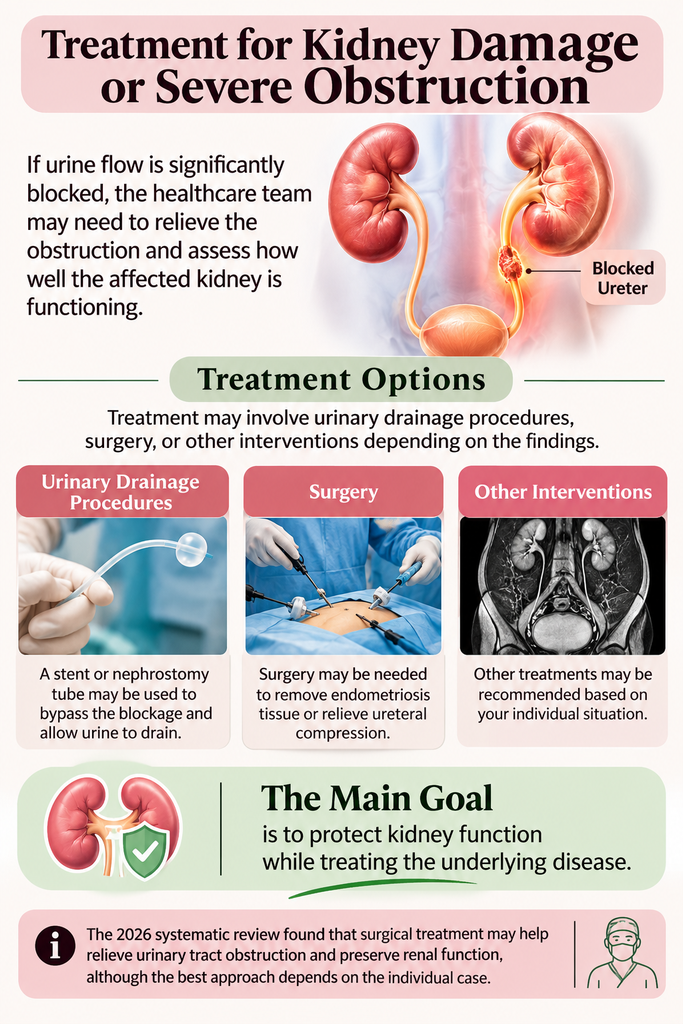
Treatment may involve urinary drainage procedures, surgery, or other interventions depending on the findings.
The main goal is to protect kidney function while treating the underlying disease.
The 2026 systematic review found that surgical treatment may help relieve urinary tract obstruction and preserve renal function, although the best approach depends on the individual case.
When Should You Seek Medical Attention?
Kidney-area pain should not automatically be attributed to endometriosis. Persistent, recurring, or unexplained flank pain deserves medical assessment, especially when you already have a diagnosis of endometriosis.
Arrange a medical appointment if you experience:
- Repeated pain in the side or back near the kidneys.
- Painful, frequent, or urgent urination.
- Blood in your urine, even if it appears around your period.
- Recurrent urinary tract infections.
- Pelvic pain alongside urinary symptoms.
- New or worsening symptoms despite your current endometriosis treatment.
Seek urgent medical care if you experience severe flank pain, fever, chills, vomiting, or difficulty passing urine. These symptoms may indicate a kidney infection or urinary obstruction and should not be treated as an ordinary endometriosis flare.
Remember that ureteral endometriosis can sometimes affect kidney drainage without causing obvious pain. If your specialist suspects deep endometriosis near the urinary tract, ask whether assessment of the kidneys and ureters is appropriate.
FAQ’s
Can endometriosis cause pain in one kidney?
Yes. Ureteral endometriosis can affect one ureter and interfere with urine drainage from the kidney on that side. This may cause flank or kidney-area pain, although some people have no noticeable symptoms.
Can endometriosis cause kidney damage?
Yes, in rare cases. If endometriosis compresses or obstructs a ureter, urine can build up and cause hydronephrosis. Prolonged obstruction may damage kidney function if it is not identified and treated.
Can endometriosis cause blood in the urine?
Yes. Blood in the urine, known as haematuria, can occur with urinary tract endometriosis, particularly when the bladder is involved. However, kidney stones, urinary infections, and other conditions can also cause it, so medical investigation is important.
Can endometriosis cause kidney pain during your period?
It can. Some people experience urinary or kidney-area discomfort that becomes worse before or during menstruation. However, ureteral endometriosis may also cause symptoms outside the menstrual period or remain silent.
Does kidney pain mean endometriosis has spread to my kidneys?
No. Kidney-area pain does not necessarily mean endometriosis is growing inside the kidney. It may result from ureteral compression, nearby pelvic disease, or an unrelated kidney or urinary condition. Direct kidney endometriosis is rare, and appropriate investigations are needed to establish the cause.
Conclusion
Can endometriosis cause kidney pain? Yes. Endometriosis can sometimes affect the urinary tract, particularly the ureters, and interfere with the normal flow of urine from the kidneys to the bladder. This may lead to flank pain, hydronephrosis, and, in serious cases, loss of kidney function.
However, direct kidney endometriosis is rare, and kidney-area pain can also be caused by infections, kidney stones, and other conditions.
If you have endometriosis and experience persistent flank pain, blood in your urine, or changes in urination, speak with your healthcare provider. Early assessment of suspected urinary tract involvement can help identify obstruction and protect your kidney health.