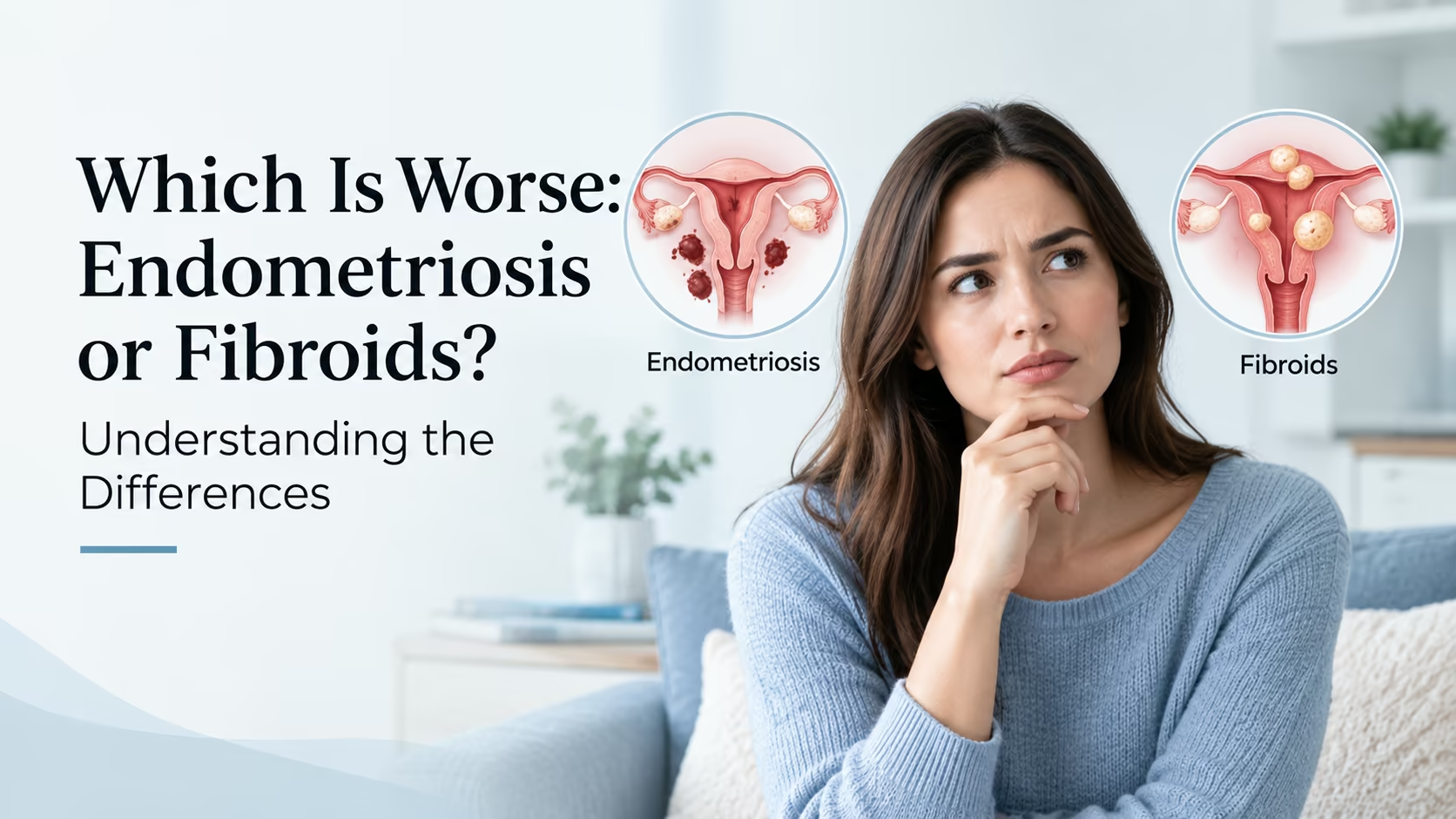
If you have been diagnosed with endometriosis or uterine fibroids, you may wonder which condition is worse. Both can cause painful periods, pelvic discomfort, fertility concerns, and symptoms that interfere with everyday life. However, they affect the body differently, so comparing them is not always straightforward.
Which is worse, endometriosis or fibroids? The honest answer is that neither condition is universally worse. Endometriosis can cause persistent pelvic pain, inflammation, and problems involving nearby organs, while fibroids may cause heavy menstrual bleeding, anemia, and pressure on the bladder or bowel. The severity depends on your symptoms, the location and extent of the condition, and your individual health goals.
Understanding these differences can help you recognize symptoms, ask better questions during medical appointments, and explore the most appropriate treatment options.
Table of Contents
Understanding Endometriosis and Uterine Fibroids
Although endometriosis and fibroids can produce similar symptoms, they are two distinct gynecological conditions. Knowing how each develops is the first step toward understanding which one may be more troublesome in your situation.
What Is Endometriosis?
Endometriosis is a chronic condition in which tissue similar to the lining of the uterus grows outside the uterus. These growths may develop on the ovaries, fallopian tubes, pelvic lining, bowel, bladder, or other nearby structures.

The tissue can contribute to inflammation, scar tissue, and adhesions, which are bands of tissue that cause organs or structures to stick together. For some people, this leads to severe menstrual cramps, pain during sex, bowel discomfort, urinary symptoms, or pelvic pain that continues beyond menstruation.
Endometriosis can also affect fertility and emotional well-being. Some people experience symptoms that interfere with work, relationships, sleep, and daily activities, while others have relatively few symptoms.
The World Health Organization describes endometriosis as a chronic disease that can have a substantial impact on quality of life. Its endometriosis fact sheet also explains that treatment aims to control symptoms and reduce their longer-term effects.
One important point is that the extent of visible endometriosis does not always correspond to the amount of pain a person experiences. Someone with limited visible disease may have severe pain, while another person with more extensive disease may report fewer symptoms.
What Are Uterine Fibroids?
Uterine fibroids are noncancerous growths that develop in the muscular wall of the uterus or extend toward its inner or outer surfaces. They are also known as leiomyomas.
Fibroids vary considerably in size. Some are small and cause no noticeable problems, while others may grow large enough to enlarge the uterus or put pressure on nearby organs. A person can also develop multiple fibroids.
Common symptoms include heavy or prolonged menstrual bleeding, painful periods, lower abdominal discomfort, lower back pain, frequent urination, constipation, and difficulty getting pregnant in certain circumstances.
According to the NHS, fibroids do not always cause symptoms and may be discovered during a routine examination or imaging test. You can read more in the official NHS guide to fibroids.
The important difference is that fibroids are growths within or around the uterus, whereas endometriosis involves tissue similar to the uterine lining growing outside the uterus.
Which Condition Causes Worse Pain?
This is one of the most important parts of the endometriosis-versus-fibroids comparison, but there is no single answer that applies to everyone.
Endometriosis is often associated with severe menstrual pain, chronic pelvic pain, and pain during sex or bowel movements. Fibroids, on the other hand, are particularly associated with heavy bleeding, menstrual cramps, abdominal pressure, and discomfort caused by the size or location of the growths.
Either condition can cause debilitating symptoms.
Endometriosis and Chronic Pelvic Pain
Endometriosis may cause pain before, during, and after menstruation. Some people also experience pelvic pain throughout the month, making it difficult to identify a period when they feel completely comfortable.
Pain may occur during sexual intercourse, urination, or bowel movements, particularly when endometriosis affects nearby tissues or organs. Scar tissue and adhesions can contribute to restricted movement or persistent discomfort in some cases.
For example, imagine experiencing severe cramps several days before your period, pain during intercourse, and discomfort when having a bowel movement. If these symptoms repeatedly interfere with everyday activities, endometriosis may be one possible explanation that deserves investigation.
However, pain intensity varies widely. Not everyone with endometriosis experiences severe pain, and the presence of chronic pain alone does not establish the diagnosis.
Fibroids and Heavy Bleeding or Pelvic Pressure
Fibroid-related discomfort often depends on how many growths are present, how large they are, and where they sit within the uterus.
Fibroids near the uterine cavity may contribute to heavy or prolonged menstrual bleeding. Over time, substantial blood loss can cause iron-deficiency anemia, leading to tiredness, weakness, dizziness, or shortness of breath.
Larger fibroids may press against the bladder and cause frequent urination. Pressure on the bowel may contribute to constipation or discomfort, while some fibroids produce persistent lower abdominal or back pain.
Fibroids may also cause severe cramps, and complications involving an individual fibroid can sometimes lead to sudden pain.
Therefore, if heavy bleeding leaves you exhausted or causes anemia, fibroids may have a greater impact on your health than endometriosis would in another person. Equally, severe endometriosis-related pain may be more disruptive than small, symptom-free fibroids.
The most useful comparison is not which diagnosis sounds more serious, but which symptoms are affecting your health and quality of life.
Endometriosis vs. Fibroids: Symptoms Compared
Because both conditions can affect menstruation and the pelvis, their symptoms sometimes overlap. Nevertheless, certain patterns may help your healthcare provider decide which investigations are appropriate.
| Symptom or feature | Endometriosis | Uterine fibroids |
| Severe period pain | Common | Can occur |
| Chronic pelvic pain | Common in symptomatic disease | Possible |
| Heavy or prolonged bleeding | Can occur | A prominent symptom |
| Pain during sex | Common in some cases | Possible |
| Bowel or bladder discomfort | Possible, especially with nearby organ involvement | Possible due to pressure |
| Iron-deficiency anemia | Possible, including from heavy bleeding | Possible from heavy bleeding |
| Fertility difficulties | May affect fertility | May affect fertility, depending on location and other factors |
| No noticeable symptoms | Possible | Common |
| Growth location | Tissue similar to uterine lining outside the uterus | Noncancerous growths within or around the uterus |
These patterns are useful clues, not a substitute for a medical assessment. For example, painful periods can occur with either condition, and heavy bleeding does not automatically mean fibroids are present.
Other conditions, including adenomyosis and pelvic inflammatory disease, can also cause overlapping symptoms. A clinician needs to consider the full picture rather than relying on one symptom.
Which Is Worse for Fertility and Pregnancy?
If you are trying to conceive now or hope to have children in the future, fertility may be an important part of your comparison. Both endometriosis and fibroids can affect reproductive health, but their effects depend on several factors.
Neither diagnosis automatically means that you will experience infertility.
How Endometriosis May Affect Fertility?
Endometriosis may affect fertility through several mechanisms. Inflammation, adhesions, ovarian endometriomas, and changes to the normal pelvic anatomy can interfere with the processes involved in conception.
For example, adhesions may affect the movement of the fallopian tubes or ovaries. Ovarian endometriomas and certain surgical procedures may also affect ovarian reserve, which refers to the remaining supply of eggs.
However, many people with endometriosis conceive naturally. Others may benefit from fertility assessment, medication, surgery in selected circumstances, or assisted reproductive treatments such as in vitro fertilization.
The appropriate approach depends on factors such as age, ovarian reserve, the location of the disease, previous surgery, and how soon pregnancy is desired.
The World Health Organization’s endometriosis guidance discusses the association between endometriosis and infertility and the different treatment approaches available.
How Fibroids May Affect Fertility?
Fibroids can affect fertility depending largely on their size, number, and location.
Fibroids that distort the inside of the uterine cavity are generally more concerning for implantation and pregnancy outcomes than fibroids that do not affect the cavity. Some fibroids may also contribute to pregnancy complications, but the risk varies considerably between individuals.
Many people with fibroids become pregnant and have healthy pregnancies. Treatment is not automatically necessary simply because a fibroid has been found.
If a fibroid is suspected of affecting fertility, a gynecologist may evaluate its precise location and discuss whether observation, medical management, or a procedure such as a myomectomy is appropriate.
Which condition is worse for fertility? There is no universal answer. Endometriosis may affect the ovaries, fallopian tubes, or surrounding pelvic anatomy, while certain fibroids may interfere with the uterine cavity. The impact on an individual depends on the details of the condition and other fertility factors.
Which Condition Is More Serious?
The seriousness of either condition depends on its symptoms, complications, and impact on overall health. Both are important, even though neither diagnosis automatically means that a person will develop severe complications.
Possible Complications of Endometriosis
Endometriosis can contribute to persistent pelvic pain, adhesions, painful intercourse, bowel or bladder symptoms, and fertility difficulties. Symptoms can return or persist after treatment, so long-term management may be needed.
In selected cases, deep endometriosis may affect organs such as the bowel, bladder, or ureters. These cases can require specialist assessment and carefully planned treatment.
Endometriosis can also have a considerable emotional and practical impact. Repeated pain, uncertainty about symptoms, and delays in diagnosis may affect work, relationships, and mental well-being.
The condition is not cancer, and having endometriosis does not mean that you will develop cancer. Although research has identified associations with certain ovarian cancer types, the absolute risk for an individual remains low and needs to be interpreted in context.
Possible Complications of Fibroids
Fibroids can lead to heavy menstrual bleeding and iron-deficiency anemia. Large growths may cause pressure symptoms, including frequent urination, constipation, and abdominal discomfort.
Some fibroids can affect fertility or pregnancy outcomes, depending on their location and other clinical factors. Rapidly worsening symptoms, unusual bleeding, or significant pelvic pain should be assessed rather than assumed to be harmless.
Fibroids are usually benign, meaning noncancerous. Having fibroids does not mean that you have uterine cancer.
It is also worth remembering that a fibroid’s size does not tell the whole story. A relatively small fibroid in a sensitive location may cause troublesome bleeding, while a much larger fibroid elsewhere may cause fewer symptoms.
Ultimately, the condition that is more serious for you is the one that presents the greatest concern based on your symptoms, findings, and individual health circumstances.
How Are Endometriosis and Fibroids Diagnosed?
Accurate diagnosis matters because the treatments for these conditions are different. A healthcare professional will usually consider your symptoms, medical history, physical examination, and the results of appropriate investigations.
Fibroids are commonly assessed using pelvic ultrasound, which can show how many growths are present, their size, and their location. MRI may be useful in selected cases when more detailed mapping is needed.
Diagnosing endometriosis can be more complicated. Ultrasound or MRI may identify endometriomas and some forms of deep endometriosis, but a normal scan does not rule out endometriosis. Depending on the symptoms and clinical findings, a specialist may discuss additional assessment or laparoscopy.
There is also an important difference between finding an abnormality and proving that it explains every symptom. Someone may have fibroids and endometriosis at the same time, so finding one condition should not automatically end the investigation if significant symptoms remain unexplained.
If you experience heavy bleeding, severe period pain, persistent pelvic discomfort, or fertility difficulties, discuss these symptoms with a gynecologist.
For additional background, see the NHS guide to endometriosis and the American College of Obstetricians and Gynecologists’ information about uterine fibroids.
Treatment Options for Endometriosis vs. Fibroids
Treatment depends on the diagnosis, symptom severity, age, medical history, and whether pregnancy is a current or future goal. Some people need active treatment, while others can be monitored if their condition is not causing problems.
Medical and Surgical Treatment for Endometriosis
Treatment for endometriosis may include pain-relieving medication, hormonal therapies, and surgery in selected cases. Hormonal treatments can help control symptoms for some people, although they are not suitable for everyone, particularly those actively trying to conceive.
Surgery may be considered when symptoms remain severe despite medical treatment, when certain endometriomas or deep lesions are present, or when the disease affects nearby organs. Surgical planning should take account of the location of the disease, possible complications, previous treatment, and fertility goals.
Surgery is not a guaranteed cure, and symptoms may persist or return. It is therefore important to discuss the expected benefits and limitations before making a decision.
Dr. Lucas Minig provides individualized endometriosis care in Valencia, Spain, including assessment and minimally invasive gynecological surgery when appropriate. People with persistent or complex symptoms can explore the available approaches through his endometriosis treatment services.
A specialist evaluation can help determine whether medical treatment, surgery, or a combination of approaches best fits a person’s circumstances. This is particularly relevant when deep endometriosis or possible involvement of nearby organs is suspected.
Medication and Procedures for Fibroids
Fibroid treatment ranges from watchful waiting to medication and procedures. If fibroids are small and cause no symptoms, treatment may not be necessary.
Medication may help control heavy bleeding or pain. Other treatments, including uterine artery embolization, may be suitable for selected patients. A myomectomy removes fibroids while preserving the uterus, whereas a hysterectomy removes the uterus and ends the possibility of carrying a pregnancy.
Not every procedure is suitable for every patient. The decision depends on fibroid size, number, location, symptoms, reproductive plans, and the advantages and disadvantages of each option.
For example, a person with heavy bleeding who hopes to become pregnant may need a different treatment plan from someone with pressure symptoms who does not wish to carry a future pregnancy.
Why Treatment Depends on Your Symptoms and Goals?
Two people with the same diagnosis may need very different care. One person with endometriosis may prioritize pain control, while another may need assessment for fertility concerns. Someone with fibroids may only require monitoring, while another may need treatment for anemia or significant pressure symptoms.
This is why the question is not simply which condition is worse. The more useful question is which condition is causing your symptoms, what risks it presents, and which treatment offers the best balance of benefits and potential harms.
If you have been diagnosed with one condition but your symptoms do not improve with treatment, ask whether another cause or a coexisting condition should be investigated.
Can You Have Endometriosis and Fibroids at the Same Time?
Yes. Endometriosis and uterine fibroids can occur in the same person, and their symptoms may overlap.
A 2025 systematic review and meta-analysis published in BMC Women’s Health examined 23 studies involving more than three million participants. It found an association between endometriosis and fibroids, although the researchers noted substantial differences between studies and rated the overall certainty of the evidence as low.
You can read the research in the systematic review and meta-analysis of endometriosis and uterine fibroids.
The finding does not prove that endometriosis directly causes fibroids. It does, however, highlight why clinicians may need to consider both conditions when a person’s symptoms cannot be fully explained by one diagnosis.
For example, fibroids may contribute to heavy menstrual bleeding while endometriosis contributes to painful bowel movements or persistent pelvic pain. Treating one condition might not resolve symptoms caused by the other.
For a more focused explanation of their relationship, read Does Endometriosis Cause Fibroids?.

When Should You See a Gynecologist?
Arrange a medical appointment if you experience period pain that disrupts daily activities, persistent pelvic pain, unusually heavy bleeding, pain during sex, or difficulty getting pregnant. You should also seek assessment if diagnosed fibroids or endometriosis are causing symptoms that are getting worse or are not responding to treatment.
Heavy menstrual bleeding can lead to anemia, so mention symptoms such as unusual fatigue, weakness, dizziness, or breathlessness to your clinician.
Seek urgent medical care for severe or sudden pelvic pain, fainting, or heavy bleeding accompanied by dizziness or weakness. If you could be pregnant and develop severe pelvic pain or bleeding, seek urgent assessment because other conditions may need to be ruled out.
Do not assume that severe pain is simply part of having a period. Although endometriosis and fibroids can cause significant discomfort, other conditions may produce similar symptoms and require different care.
Conclusion
So, which is worse, endometriosis or fibroids? Neither condition is automatically worse for everyone. Endometriosis may be more disruptive when it causes chronic pelvic pain, adhesions, or symptoms involving the bowel or bladder. Fibroids may be more troublesome when they cause heavy menstrual bleeding, anemia, significant pressure, or problems related to their size and location.
Both conditions can affect fertility, and some people have both at the same time. The right diagnosis and treatment depend on the symptoms you experience, the findings of medical investigations, and your personal goals.
If your symptoms interfere with daily life, a gynecological assessment can help identify the cause and guide treatment. For complex or persistent endometriosis symptoms, specialist evaluation may also help you understand the medical and surgical options available.
Frequently Asked Questions
Is endometriosis more painful than fibroids?
Endometriosis can cause severe menstrual cramps, persistent pelvic pain, painful sex, and discomfort during bowel movements. Fibroids can also cause significant pain, particularly when they are large or produce pressure symptoms. Neither condition is always more painful than the other. The severity depends on the location and extent of the condition, individual pain sensitivity, and other health factors.
Which is more dangerous, endometriosis or fibroids?
Neither is automatically more dangerous. Endometriosis can involve extensive inflammation, adhesions, chronic pain, and, in some cases, nearby organs. Fibroids can cause substantial blood loss, anemia, pressure symptoms, and fertility or pregnancy concerns. Serious complications are not inevitable with either condition. A clinician can assess the risks based on the individual’s symptoms and medical findings.
Can fibroids and endometriosis cause infertility?
Yes, both conditions can contribute to fertility difficulties, but many people with either diagnosis conceive. Endometriosis may affect ovarian function, the fallopian tubes, or pelvic anatomy. Fibroids may affect fertility when their size or location interferes with the uterine cavity or other reproductive processes. A fertility evaluation can help determine whether either condition is affecting an individual’s chances of pregnancy.
Can you have endometriosis and fibroids together?
Yes. The two conditions can occur simultaneously and produce overlapping symptoms, such as painful periods and pelvic discomfort. One condition may explain some symptoms while the other contributes to additional problems, such as heavy bleeding. If treatment for a diagnosed condition does not adequately improve your symptoms, ask your healthcare professional whether further assessment is appropriate.
Which condition is easier to treat, endometriosis or fibroids?
It depends on the individual case. Some fibroids require no treatment, while others need medication or procedures. Endometriosis symptoms can often be managed with medication, hormonal treatments, or surgery, but symptoms may persist or return. The best treatment depends on symptom severity, disease location, fertility plans, previous treatment, and the potential benefits and risks of each option.