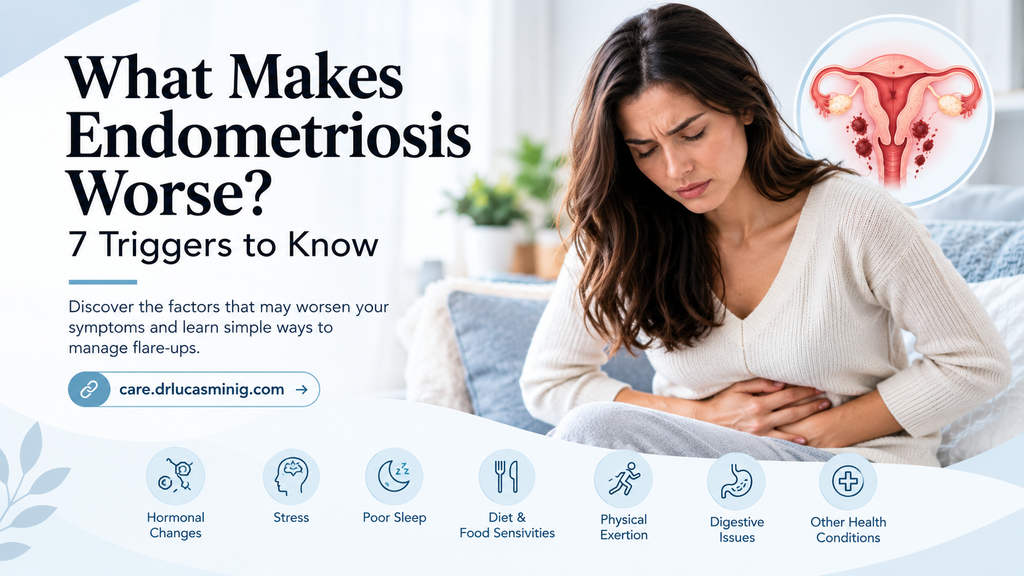
If you live with endometriosis and frequently experience headaches, you might wonder whether the two conditions are connected. Does endometriosis cause headaches, or could hormonal changes, migraine, or another health issue explain the pain?
Research suggests that endometriosis is associated with a higher likelihood of migraine. However, scientists have not established that endometriosis directly causes every headache experienced by someone with the condition.
The connection may involve hormonal fluctuations, shared biological risk factors, and the way the nervous system processes pain. Understanding these possibilities can help you recognize symptom patterns, find appropriate treatment, and know when to seek medical advice.
Let’s explore what the research tells us, what your symptoms might mean, and how to take the next step toward better care.
Can Endometriosis Cause Migraines or Frequent Headaches?
The relationship between endometriosis and headaches is more complex than a simple yes-or-no answer.

Endometriosis occurs when tissue similar to the lining of the uterus grows outside the uterus. These lesions can contribute to inflammation, scar tissue, and pelvic pain. Common symptoms include painful periods, persistent pelvic discomfort, pain during intercourse, and sometimes difficulties becoming pregnant.
Headaches and migraine, meanwhile, involve the nervous system. Although they are not among the classic symptoms used to identify endometriosis, research suggests that migraine occurs more frequently among people with endometriosis than among those without it.
This distinction matters. If you have endometriosis and experience recurring headaches, the two conditions may be related. However, your headaches could also have a separate cause that requires its own assessment.
What Does the Latest Research Say?
A systematic review and meta-analysis published in The Journal of Headache and Pain in April 2025 examined the association between endometriosis and migraine.
The researchers analyzed 13 observational studies involving 331,655 people. Their findings showed that endometriosis was associated with approximately 2.25 times the odds of migraine compared with not having endometriosis.
That is an important finding, but it needs context. The researchers identified substantial variation between the studies, and many had a high risk of bias. They therefore advised caution when interpreting the results.
As the authors explain, “caution is advised when interpreting and applying these findings in clinical practice.”
You can read the full study here: The Association Between Endometriosis and Migraine: A Systematic Review and Meta-Analysis of Observational Studies.
The takeaway? There is a meaningful association worth investigating, but the research does not prove that endometriosis directly causes migraine in every affected person.
Why Association Does Not Always Mean Causation?
Imagine two warning lights appearing on a car dashboard at the same time. Their simultaneous appearance suggests that something might connect them, but it does not tell you whether one warning light caused the other.
The same principle applies here.
Endometriosis and migraine share several possible biological influences, and both can affect daily functioning and quality of life. Hormonal changes may contribute to both conditions, while individual susceptibility and other health factors may also play a role.
Researchers are still investigating these connections. For now, it is best to treat headaches as a symptom worth evaluating rather than assuming they are automatically caused by endometriosis.
Why Might Endometriosis and Headaches Occur Together?
There is no single confirmed explanation for the relationship between endometriosis and headaches. Several possible mechanisms may help explain why the conditions overlap.
Hormonal Fluctuations and Estrogen Changes
Hormones influence both the reproductive system and certain processes involved in migraine.

Estrogen levels naturally change throughout the menstrual cycle. For some people who experience migraine, a rapid decline in estrogen shortly before menstruation can trigger an attack. This is one reason headaches and migraine may occur around the same time as period-related symptoms.
People with endometriosis may also experience symptoms that change throughout their menstrual cycle. When headaches repeatedly appear alongside pelvic pain or menstruation, hormonal influences may be worth discussing with a healthcare professional.
However, hormonal changes do not affect everyone in the same way. Some people experience menstrual migraine without endometriosis, and some people with endometriosis never develop migraine.
For more information, the American Migraine Foundation’s guide to menstrual migraine and hormones explains how hormonal fluctuations can influence migraine attacks.
Understanding Menstrual Migraine
Menstrual migraine is a type of migraine associated with menstruation. According to the International Classification of Headache Disorders, attacks in the menstrual window typically occur from two days before menstruation through the first three days of bleeding.
Two patterns are recognized:
- Pure menstrual migraine: Attacks occur only within the menstrual window.
- Menstrually related migraine: Attacks occur during that window but also at other times of the month.
These patterns can help explain why some people experience headaches shortly before or during their periods. They do not, by themselves, establish a diagnosis of endometriosis.
Inflammation, Pain Processing and Shared Risk Factors
Endometriosis is a chronic inflammatory condition, and inflammation is one area researchers are investigating when studying its relationship with migraine.
Another possibility involves pain processing. Some people living with chronic pain conditions develop increased sensitivity within the nervous system, sometimes described as central sensitization. This process may contribute to heightened pain responses, although it has not been established as the direct cause of headaches in people with endometriosis.
Researchers have also investigated possible shared genetic and biological risk factors between the two conditions.
These explanations are promising areas of research, not settled conclusions. It would be inaccurate to say that inflammation from a pelvic endometriosis lesion directly travels to the brain and causes a headache.
The most useful approach is to recognize that several factors could contribute while evaluating each person’s symptoms individually.
What Do Endometriosis-Associated Headaches Feel Like?
There is no single headache pattern that proves a person has endometriosis. The characteristics depend on the type of headache and the individual’s circumstances.
If you experience migraine, you may notice:
- Throbbing or pulsating head pain.
- Pain that is moderate to severe.
- Nausea or vomiting.
- Sensitivity to light or sound.
- Pain that worsens with ordinary physical activity.
- Difficulty concentrating or carrying out daily tasks.
Some people also experience an aura before or during a migraine. An aura may involve temporary visual disturbances, tingling, or difficulty speaking. New or unusual neurological symptoms should be assessed promptly rather than automatically attributed to migraine.
Other headaches may feel like pressure or tightness around the forehead, temples, or back of the head. These can have different causes, including tension, sleep disruption, dehydration, medication effects, or other medical conditions.
The timing of your headache is often as useful as the pain itself. Does it begin shortly before your period? Does it appear with severe cramps? Does it continue after menstrual bleeding ends?
Recording these details can help your healthcare professional identify patterns and decide whether further evaluation is needed.
When Do Headaches Occur With Endometriosis?
Headaches can occur at different points in the menstrual cycle. Paying attention to their timing may help you and your clinician understand what could be contributing to them.
- Before or during menstruation: A headache that regularly develops around your period may be consistent with menstrual migraine, particularly if it has typical migraine symptoms. This pattern can occur with or without endometriosis.
- Around ovulation: Some people notice headaches around the middle of their menstrual cycle. Hormonal changes may contribute, although a headache at this time does not establish a particular diagnosis.
- Outside the menstrual cycle: Headaches can occur throughout the month for reasons unrelated to menstruation. Persistent or changing symptoms deserve evaluation, especially if they interfere with your daily life.
- During changes in treatment: Starting, stopping, or changing hormonal medication may influence headache patterns in some people. Recording when a medication changes and when symptoms begin can give your clinician useful information.
Remember, a recurring pattern can offer clues, but it cannot independently confirm the cause.
Can Endometriosis Medication Cause Headaches?
Yes, some treatments used for endometriosis can cause headaches or change the frequency or severity of migraine in certain people.
Hormonal treatments influence reproductive hormones, and their effects on headaches vary. Some people notice improvement, while others experience worsening symptoms or little change. Certain pain medicines and other medications can also contribute to headaches in specific circumstances.
If headaches begin after starting a new treatment, do not assume that you must tolerate them. Tell your prescribing clinician when the symptoms started, how severe they are, and whether they appear to follow a menstrual pattern.
Your clinician can review your medication, medical history, migraine symptoms, and individual risk factors to determine whether a treatment adjustment is appropriate.
Do not stop or change prescribed hormonal treatment on your own. In particular, if you experience migraine with aura, discuss this with your clinician before choosing an estrogen-containing contraceptive, because this can affect the safety of certain treatment options.
Importantly, managing endometriosis and treating migraine are related but distinct goals. A medication that improves pelvic pain may not necessarily control headaches, so both problems may need attention.
How Can You Manage Headaches if You Have Endometriosis?
Although there is no single treatment suitable for everyone, several practical steps can help you understand your symptoms and work toward better control.
Keep a Headache and Menstrual Diary
A symptom diary can help reveal patterns that are difficult to remember during a medical appointment.
Record the first day of your period, when each headache starts, how long it lasts, its severity, and any accompanying symptoms. Also note sleep changes, missed meals, stress, medication use, and other potential triggers.
After a few menstrual cycles, the record may show whether headaches tend to appear before menstruation, during bleeding, or at unrelated times.
A diary does not diagnose endometriosis or migraine, but it can make conversations with your healthcare professional more informative.
Review Treatment With Your Healthcare Professional
Treatment depends on the type of headache, symptom severity, medical history, and whether hormonal triggers are involved.
For migraine, a clinician may recommend an appropriate medication to treat attacks, preventive treatment for frequent or disabling episodes, or strategies for managing predictable menstrual migraine. Your clinician can also review whether an existing endometriosis treatment may be influencing your headaches.
Do not rely on painkillers every day without medical advice. Frequent use of certain acute headache medications can contribute to medication-overuse headache.
Support Your Everyday Routine
Everyday habits cannot cure endometriosis, but they may help reduce avoidable headache triggers.
Try to maintain a regular sleep schedule, eat meals consistently, drink enough fluids, and make time for appropriate physical activity and relaxation. If bright light, certain foods, or disrupted sleep appear to trigger your headaches, record the pattern and discuss it with your clinician.
Be cautious about restrictive diets, supplements, or online remedies claiming to balance hormones or cure endometriosis. Evidence for many such claims is limited, and some products may interact with medication.
When Should You Seek Medical Help for Headaches?
Recurring headaches should not be dismissed as just another part of living with endometriosis. Arrange a medical assessment if your headaches become more frequent, more severe, interfere with normal activities, or fail to improve with appropriate treatment.
Seek emergency medical care if you experience a sudden, extremely severe headache, particularly one that reaches maximum intensity rapidly. A headache accompanied by new weakness, numbness, confusion, difficulty speaking or walking, loss of vision, seizures, or a stiff neck with fever can signal a serious condition.
You should also seek prompt medical advice for a new or substantially different headache, particularly during pregnancy or after childbirth, or when it follows a head injury.
These warning signs should not be attributed to endometriosis or menstrual migraine without appropriate assessment. For further guidance, see the NHS information on headaches and Mayo Clinic’s headache guidance.
When Should You Consider Specialist Endometriosis Care?
If your headaches occur alongside severe menstrual cramps, persistent pelvic pain, painful intercourse, bowel or bladder symptoms associated with your period, or fertility concerns, it may be worth seeking a gynecological assessment.

A clinician can review your symptoms, medical history, and previous investigations to determine whether endometriosis should be considered. Depending on the findings, evaluation may include an examination, ultrasound, MRI, or specialist referral. A normal initial scan does not always exclude endometriosis, so persistent symptoms may still require further assessment.
Headaches may also warrant assessment by a primary care clinician or neurologist, especially if migraine is suspected or symptoms remain difficult to manage. You do not necessarily have to choose between gynecological care and headache care; the most appropriate plan may involve both.
For people seeking specialist endometriosis evaluation in Spain, Dr. Lucas Minig’s practice in Valencia offers individualized endometriosis treatment planning, including medical management and minimally invasive surgical options when clinically appropriate. The clinic also provides consultation options for international patients.
You can explore the endometriosis service and treatment approach or review the clinic’s endometriosis treatment options.
It is important to understand that an endometriosis consultation focuses on evaluating and managing the gynecological condition. It does not establish that endometriosis is causing your headaches, and surgery should not be assumed to cure migraine. If you are considering care, discuss your pelvic symptoms, headache history, treatment goals, and any existing migraine diagnosis with your healthcare team.
Medical References
- Colombo GE, et al. (2025). The association between endometriosis and migraine: a systematic review and meta-analysis of observational studies. The Journal of Headache and Pain, 26, 82. Read the peer-reviewed research.
- American College of Obstetricians and Gynecologists (ACOG). Endometriosis: Frequently Asked Questions. Read the clinical information.
- National Health Service (NHS). Endometriosis: Symptoms, diagnosis and treatment. Read NHS guidance.
- American Migraine Foundation. Hormonal and Menstrual Migraine: Symptoms and Treatment. Read the patient resource.
- National Health Service (NHS). Headaches: Causes, symptoms and when to seek help. Read NHS guidance.
Conclusion
So, does endometriosis cause headaches? Research shows a meaningful association between endometriosis and migraine, but it has not established that endometriosis directly causes every headache. Hormonal fluctuations, shared biological factors, and individual pain responses may help explain the connection, while medication effects and unrelated conditions can also contribute.
If you experience recurring headaches alongside menstrual or pelvic symptoms, start by tracking your symptoms and discussing them with an appropriate healthcare professional. A personalized assessment can help distinguish menstrual migraine from other headache disorders, review your current treatments, and determine whether specialist endometriosis care is appropriate.
You deserve answers that address your symptoms as a whole, rather than assuming that every new symptom comes from one condition.
FAQ’s
Can endometriosis cause headaches every day?
Endometriosis is associated with migraine, but daily headaches are not specific to the condition. Frequent headaches may have several causes, including migraine, tension-type headache, sleep problems, medication overuse, or other medical conditions. Seek medical advice if headaches occur daily, become more severe, or interfere with everyday activities.
Can endometriosis cause migraines before your period?
Endometriosis and migraine can occur together, and hormonal fluctuations before menstruation may trigger migraine attacks in susceptible individuals. However, menstrual migraine can also occur without endometriosis. Tracking your headache timing over several cycles can help your clinician identify a pattern.
Can you have endometriosis without pelvic pain but still get headaches?
Yes. Some people have endometriosis with few or no typical pelvic symptoms, and a person with endometriosis may also experience headaches. However, headaches alone are not enough to diagnose endometriosis. Evaluation should be based on your overall medical history and any additional symptoms.
Will treating endometriosis stop migraines?
Not necessarily. Treatment may improve endometriosis-related symptoms, but there is no guarantee that it will eliminate migraines. Headaches often need their own assessment and treatment plan. If you notice changes in headaches after starting hormonal therapy or undergoing surgery, discuss them with your healthcare professional.
Should you see a gynecologist or neurologist for headaches?
A gynecologist may be appropriate if headaches occur alongside symptoms suggestive of endometriosis, such as severe period pain or persistent pelvic discomfort. A primary care clinician or neurologist can assess recurrent headaches and suspected migraine. Depending on your symptoms, you may benefit from care involving both specialties. Seek emergency care for sudden, severe headache or new neurological warning signs.