
Minimally invasive endometrial cancer treatment in Spain. Fast second opinions, robotic surgery, and personalized care from Dr. Lucas Minig. Book now.
Introduction
Endometrial (uterine) cancer is one of the most treatable gynecologic cancers when detected early and managed by an experienced multidisciplinary team. At Dr. Lucas Minig’s Valencia center in Spain, we combine fast diagnostics, precision surgery, modern systemic therapies and individualized survivorship planning to give each patient the best possible chance of cure — while minimizing recovery time and preserving quality of life.
If you are researching “endometrial cancer cure,” this page explains what cure means, how treatment decisions are made, and why choosing an experienced surgeon and an integrated Spanish center can change outcomes. At the end you’ll find clear next steps to request a second opinion or book a consultation with Dr. Minig.
Table of Contents
What is endometrial (uterine) cancer?
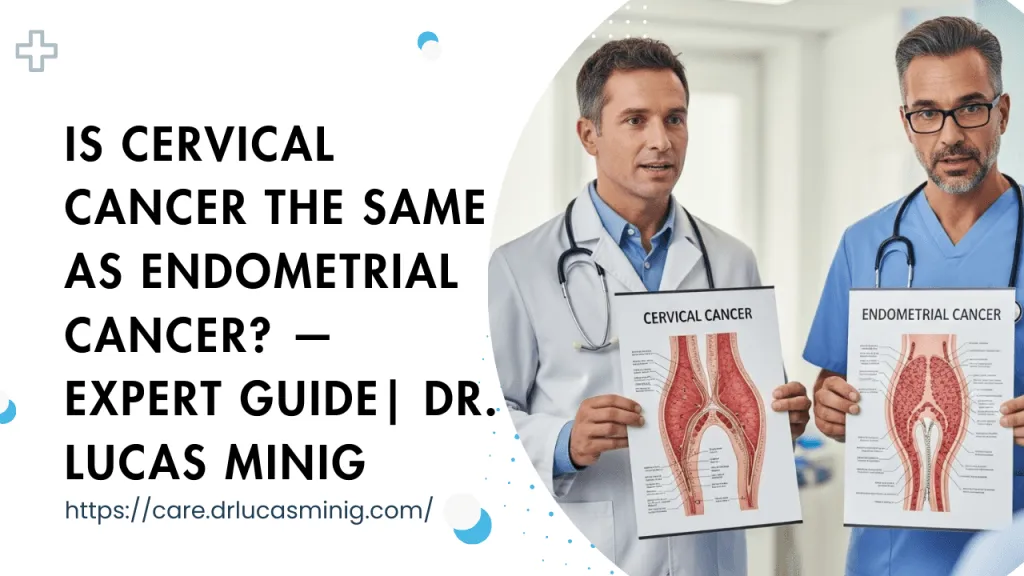
Endometrial cancer starts in the lining of the uterus (the endometrium). It is distinct from ovarian and cervical cancers and most commonly affects women after menopause, though it can occur at younger ages. The most common form is endometrioid adenocarcinoma, which tends to be hormone-sensitive and detected earlier because it often causes symptoms.
Our approach in Spain focuses on accurate diagnosis, full pathologic and molecular evaluation, and a treatment pathway tailored to the tumor’s biology and the patient’s goals — including fertility preservation when appropriate.
Common symptoms to watch for
- Abnormal vaginal bleeding (including post-menopausal bleeding) — the single most important early symptom.
- Unusual vaginal discharge or spotting.
- Pelvic pain or pressure (less common in early disease).
- Changes in bowel or urinary habits when disease is advanced.
If you experience abnormal bleeding, don’t wait: an evaluation can often detect endometrial cancer early when cure rates are highest.
Types and grading that matter for cure
- Histologic types: Endometrioid (most common), serous, clear cell, carcinosarcoma and others. Non-endometrioid types (e.g., serous) can behave more aggressively.
- Grade: Low (grade 1), intermediate (grade 2), high (grade 3). Higher grade correlates with higher risk of spread and influences the need for additional therapy.
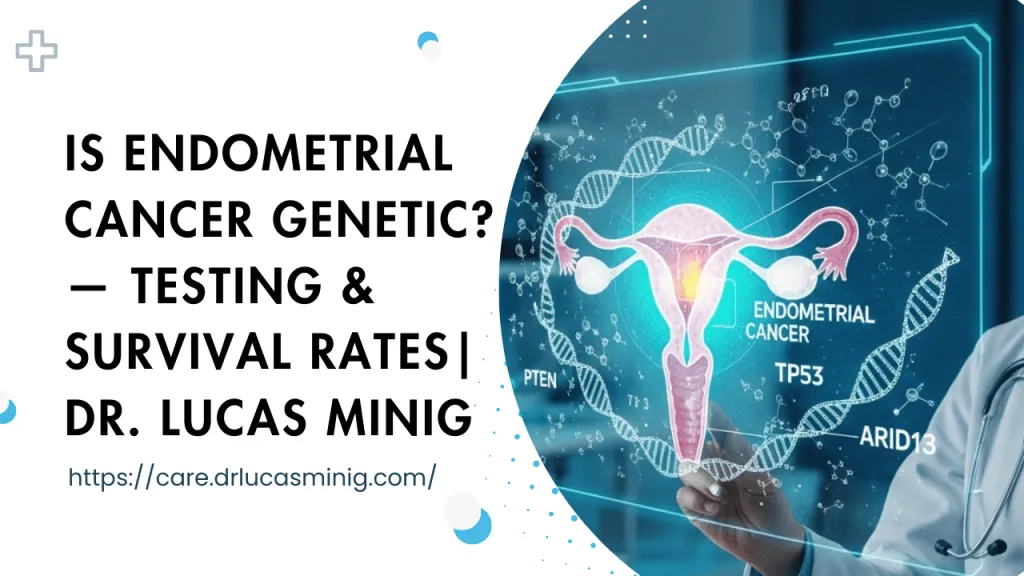
- Molecular features: Modern care includes testing for mismatch repair deficiency (MMR/MSI), POLE mutations, and p53 status — information that refines prognosis and treatment choices.
Understanding type and grade early helps clinicians select the therapies most likely to achieve cure.
What “endometrial cancer cure” really means?
“Cure” implies that cancer has been eradicated and does not return over a long follow-up period. For endometrial cancer, cure is a realistic expectation for many patients — particularly those diagnosed at an early stage and treated with guideline-based surgery and appropriate adjuvant therapies.
Pragmatically, we explain cure in terms of probability: early-stage, low-grade tumors have very high long-term survival; later stages or aggressive histologies require multimodal treatment and sometimes shift the objective from cure to long-term control. At Dr. Minig’s center we provide straight answers about likely outcomes, not promises — and we back recommendations with individualized pathology and molecular data.
Why early diagnosis matters (and common early signs)?
Early diagnosis matters because most endometrial cancers present symptoms (unlike many other gynecologic cancers), allowing detection while the disease is still confined to the uterus. Detecting cancer early expands curative treatment options, reduces the need for aggressive adjuvant therapies, and shortens recovery times.
Common early sign: any unexplained vaginal bleeding, especially after menopause or between periods — this should prompt timely evaluation (clinical exam, transvaginal ultrasound, hysteroscopy and targeted biopsy).
How doctors stage endometrial cancer — why stage shapes the chance of cure?
Accurate staging determines treatment and prognosis. Staging combines clinical exam, imaging and surgical pathologic findings to tell us how far cancer has spread.
FIGO/SEER staging in plain language
- Stage I: Tumor confined to the uterus.
- Stage II: Tumor invades the cervix.
- Stage III: Local spread beyond the uterus (adnexa, vagina, or regional lymph nodes).
- Stage IV: Distant spread (bladder, bowel, lungs, liver, distant lymph nodes).
Surgical staging (including sentinel node assessment) gives the most reliable information to guide curative therapy.
Survival statistics by stage
While individual prognosis depends on tumor biology and patient factors, the general pattern is:
- Stage I: Highest cure rates — many patients are effectively cured after surgery.
- Stage II–III: Variable depending on spread and histology; multimodal treatment (surgery + radiation ± chemotherapy) can still lead to cure in many cases.
- Stage IV: Cure less likely; treatments focus on control, symptom relief, and prolonging quality life.
At our center in Spain, we combine precise staging, tumor board review and modern adjuvant therapy to maximize the probability of cure.
Standard curative treatments — the roadmap?

The roadmap to cure typically relies on a combination of surgery, selective radiation and chemotherapy when indicated. Treatment is individualized using pathology, grade, stage and molecular markers.
Hysterectomy and surgical staging
A total hysterectomy with bilateral salpingo-oophorectomy (removal of uterus, ovaries and fallopian tubes) is the primary curative operation for most patients. Whenever possible, we use minimally invasive techniques (laparoscopic or robotic surgery) to reduce postoperative pain, shorten hospital stays, and speed return to daily life — without compromising oncologic outcomes when performed by an experienced surgeon.
Lymph node assessment and sentinel node biopsy
Sentinel lymph node (SLN) mapping identifies the first nodes that drain the tumor. If those nodes are clear, the risk of nodal spread is low and extensive node removal can often be avoided. SLN biopsy reduces risk of lymphedema and shortens recovery while preserving staging accuracy.
Adjuvant radiation therapy
Radiation (external beam or vaginal brachytherapy) reduces local recurrence risk for patients with intermediate- to high-risk features in pathology. Radiation planning is individualized to balance recurrence risk and side effects.
Chemotherapy: when and why
Chemotherapy (commonly carboplatin and paclitaxel) is used for higher-stage disease, aggressive histologies, or tumors with high-risk features. It treats microscopic disease beyond the pelvis and reduces the chance of distant relapse.
Advanced and recurrent disease — control, not always cure
If cancer has spread outside the pelvis or recurs after initial therapy, achieving a cure becomes more difficult but many patients still derive meaningful benefit from modern systemic therapies, targeted agents, and personalized combinations. The focus in advanced disease is:
- Control tumor growth.
- Maintain quality of life.
- Use molecular testing to identify therapies that provide the best chance of prolonged remission.
We discuss realistic expectations openly and align treatment with each patient’s priorities.
Newer systemic options: targeted therapy & immunotherapy
Molecular profiling has opened treatment options beyond chemotherapy. For selected patients, targeted agents and immune checkpoint inhibitors can produce durable responses. Testing for MMR/MSI, POLE mutations and other molecular markers helps identify candidates for immunotherapy or targeted drugs — a major advance in personalized care.
At Dr. Minig’s center in Spain we integrate molecular testing into routine evaluation so we can access these options when they are likely to benefit you.
Fertility-sparing options — when cure and childbearing both matter
Some younger patients want to preserve fertility. In carefully selected cases (low-grade, early disease confined to endometrium), conservative treatment with high-dose progestin (oral or intrauterine device) plus close surveillance can be an option — but it requires expertise and strict follow-up.
Who is eligible and what the pathway looks like?
Eligibility criteria typically include:
- Grade 1 endometrioid tumor.
- Disease confined to endometrium on MRI.
- Strong desire for future pregnancy and willingness to accept risks and close surveillance.
Pathway:
- Confirm diagnosis with hysteroscopic biopsy and MRI.
- Discuss fertility options with a reproductive specialist.
- Initiate progestin therapy with frequent endometrial sampling.
- Attempt conception under close monitoring; plan definitive surgery after childbearing.
We counsel candidly about success rates, risks of progression, and the need for eventual definitive surgery.
Why choosing the right surgeon and center in Spain changes outcomes
Surgical experience, hospital resources and multidisciplinary coordination materially influence outcomes. Centers that combine high surgical volume, specialized pathology, access to modern radiotherapy and clinical trials generally deliver better results.
Surgical experience, volume, and multidisciplinary teams
- Experience: Surgeons who perform higher volumes of gynecologic oncology cases have lower complication rates and better oncologic outcomes.
- Volume and resources: Access to advanced imaging, robotic platforms, rapid pathology, and specialized nursing improves the patient journey.
- Multidisciplinary teams: Regular tumor boards with gynecologic oncologists, medical and radiation oncologists, pathologists and fertility specialists ensure the best-tailored plan.
How Dr. Lucas Minig and our Valencia team work differently?
- Speed: Rapid, coordinated diagnostics — MRI, hysteroscopy, molecular pathology — so treatment decisions aren’t delayed.
- Precision surgery: Minimally invasive approaches with sentinel node mapping to minimize recovery time and long-term complications.
- Personalization: Routine molecular profiling to align systemic therapy and clinical trial options.
- International patient support: English-speaking staff, telemedicine second opinions, and clear logistics for patients traveling to Spain.
These elements combine to reduce time to treatment and maximize the chance of cure with the least disruption to life.
The patient journey with us in Spain — step-by-step (consult to follow-up)
Virtual consult & second opinion: why this helps
Start with a secure upload of pathology and imaging. A virtual consult gives you a clear, expert opinion quickly — often within days — and can prevent unnecessary procedures or delay.
Preoperative workup and staging
If surgery is indicated, we complete a focused preoperative assessment: MRI, chest imaging if needed, blood tests, and final pathology review. Your case is discussed at our tumor board to confirm the plan.
Surgery day and recovery — what to expect
Most minimally invasive surgeries are same-day or 24–48 hour admissions. Expect clear perioperative instructions, pain control strategies, early mobilization and physiotherapy when needed. Our team provides a written recovery plan and 24/7 contact for urgent concerns.
Follow-up schedule and survivorship care
Follow-up includes routine clinic visits, symptom checks and imaging based on stage. We also provide survivorship support: management of menopausal symptoms, lymphedema prevention, sexual health counseling and psychological support.
Outcomes you can expect: realistic numbers and recovery stories
Survival, recurrence risk, and quality of life
- Early-stage patients commonly achieve long-term remission after surgery, with a high likelihood of cure.
- Patients with higher-risk features may require adjuvant therapy; many achieve durable remissions with combined treatment.
- Quality-of-life priorities (fertility preservation, menopausal management, quick recovery) are integrated into every care plan.
Short anonymized case vignette
A 52-year-old woman presented with post-menopausal bleeding. Hysteroscopic biopsy confirmed grade 1 endometrioid carcinoma. MRI showed disease limited to the endometrium. She underwent laparoscopic hysterectomy with sentinel node mapping at our Valencia center, no nodes were positive, and she required no further therapy. She returned home after 24 hours and returned to normal activities in three weeks — disease-free at two years follow-up.
(Details above are anonymized and simplified to illustrate a typical early-stage pathway.)
Why international patients choose Spain — logistics & comfort?
Spain offers modern hospitals, experienced specialists, and a patient-friendly environment for international care. Valencia is an accessible city with excellent airline connections, English-speaking medical staff, and comfortable accommodation options.
Fast access, English-speaking care, and travel support
We provide:
- Rapid appointment scheduling.
- English and multilingual patient coordination.
- Help with visas, transfers and accommodation.
- Transparent treatment timelines and cost estimates for international packages.
How to get started with Dr. Lucas Minig
- Request a second opinion: Upload your pathology and imaging through our secure portal for expedited review.
- Book a virtual consultation: Discuss the recommended plan directly with Dr. Minig.
- Plan your visit: We’ll prepare a personalized treatment timeline, travel logistics, and an international patient package if you choose in-person care.
Call to action: Contact our Valencia team today to request a fast second opinion or schedule a teleconsultation with Dr. Lucas Minig.
FAQ’s
What are my chances of cure with endometrial cancer?
Chances depend on stage, grade and tumor biology. Early-stage, low-grade tumors have a high likelihood of long-term cure following surgery. We provide individualized estimates after pathology and staging.
Can I get a second opinion remotely from Spain?
Yes. Dr. Minig offers expedited virtual second opinions: upload your pathology and imaging and schedule a teleconsult to review options and timelines.
Is minimally invasive surgery safe for endometrial cancer?
When performed by an experienced gynecologic oncologist using appropriate staging techniques (including sentinel node mapping), minimally invasive hysterectomy is safe and shortens recovery without sacrificing oncologic outcomes.
Can I keep my uterus if I want children?
Fertility-sparing treatment is possible for a small, carefully selected group of patients. It involves hormonal therapy and close surveillance and requires collaboration with reproductive specialists.
How quickly can I be treated if I travel to Spain?
Our team prioritizes rapid work-up for international patients: virtual review, accelerated diagnostics and coordinated scheduling. Typical timelines depend on testing requirements and travel, but we focus on minimizing delays and providing clear scheduling from the first contact.
Conclusion
Endometrial cancer is frequently curable — especially when detected early and managed by a coordinated, experienced team. At Dr. Lucas Minig’s Valencia center in Spain, we provide rapid diagnostics, precision minimally invasive surgery, molecular-guided treatments, and international patient services designed to maximize the chance of cure while protecting quality of life. If you seek a clear treatment plan, expert second opinion, or personalized surgical care, reach out today and take the next step toward confident, evidence-based care.