Author name: Muhammad Talha

Does Endometriosis Cause Fibroids? | Dr Lucas minig
Endometriosis

Does Endometriosis Cause Fibroids? The Truth About Endometriosis vs Fibroids 

Have you been diagnosed with endometriosis and then discovered fibroids on an ultrasound? It is completely understandable to wonder whether one condition caused the other. So, does endometriosis cause fibroids? Not exactly. Endometriosis is not currently proven to directly cause uterine fibroids. They are two different gynecological conditions with different characteristics. However, they can occur […]
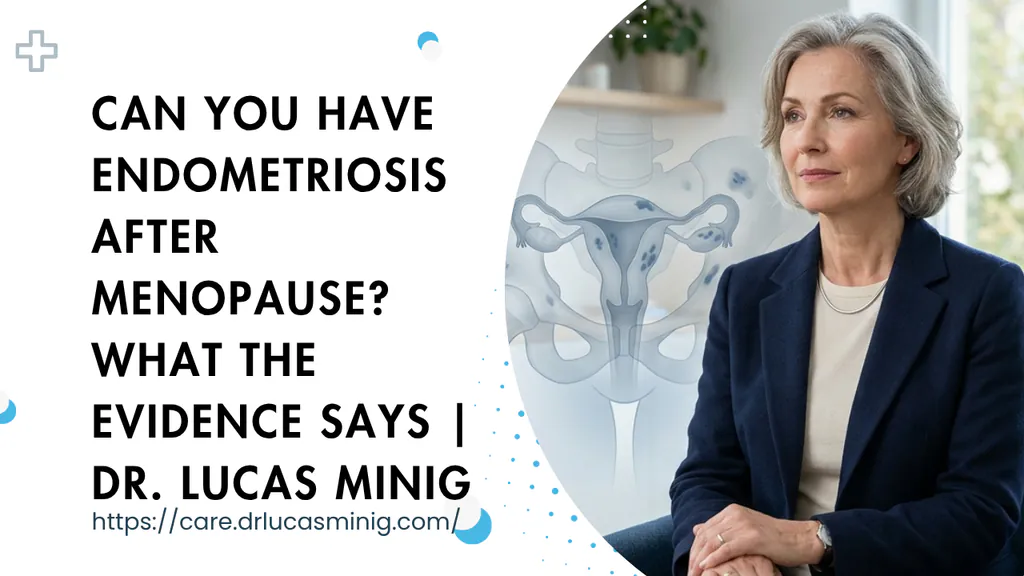
Can You Have Endometriosis After Menopause? | Dr Lucas minig
Endometriosis

Can You Have Endometriosis After Menopause? What the Evidence Says

Menopause often brings relief for women with endometriosis because periods stop and estrogen levels decline. But does that mean endometriosis always disappears? Not necessarily. Can you have endometriosis after menopause? Yes. Although uncommon, endometriosis can persist, recur, or, rarely, be diagnosed for the first time after menopause. Without periods, the classic pattern of cyclical pain

When Does Endometriosis Start? | Dr Lucas minig
Endometriosis

When Does Endometriosis Start? Understanding the Age of Onset

When does endometriosis start? There is no single age that applies to everyone. Endometriosis can occur after menstruation begins, including during the teenage years, yet many people are not diagnosed until much later. The World Health Organization (WHO) states that endometriosis can affect people “from the onset of their first period (menarche) through menopause.”  So,

Can Endometriosis Cause Hair Loss? | Dr Lucas minig
Endometriosis

Can Endometriosis Cause Hair Loss? What the Research Really Says

Noticing extra hair on your pillow, in the shower, or on your hairbrush can be unsettling—especially when you already live with endometriosis. So, can endometriosis cause hair loss? Current research does not establish endometriosis itself as a direct cause of hair loss. However, several factors associated with endometriosis—including heavy menstrual bleeding, iron deficiency, chronic stress,

Is Endometriosis a Disability? | Dr Lucas minig
Endometriosis

Is Endometriosis a Disability? Understanding the Medical and Legal Reality

Endometriosis is often described as a painful gynecological condition, but for some women, its effects go far beyond pelvic pain. Severe symptoms can interfere with work, sleep, relationships, mobility, fertility, and everyday activities. So, is endometriosis a disability? The answer is sometimes. Endometriosis can be medically disabling, but having an endometriosis diagnosis does not automatically

Bladder Endometriosis | Dr Lucas minig
Uncategorized

Bladder Endometriosis: Symptoms, Causes, Diagnosis and Treatment

Bladder endometriosis is an uncommon form of endometriosis that affects the urinary tract, most often the bladder. It can cause frequent urination, urgency, painful urination, bladder pressure, and sometimes blood in the urine. The difficulty is that these symptoms can look like a UTI or interstitial cystitis. So, can endometriosis affect the bladder? Yes—and recognizing

Endometriosis and Fertility Problems | Dr lucas minig
Endometriosis

Endometriosis and Fertility Problems: What You Need to Know 

Trying to conceive can feel exciting, but an endometriosis diagnosis can also raise a difficult question: will endometriosis make getting pregnant harder? The answer is not simply yes or no. Endometriosis and fertility are closely linked in some women, but endometriosis does not automatically mean infertility. Some women conceive naturally, while others need fertility treatment

Surgery for Endometriosis | Dr Lucas minig
Endometriosis

Surgery for Endometriosis: Excision, Risks & Hysterectomy 

Considering surgery for endometriosis? Learn about excision, recovery, risks, recurrence, fertility and whether hysterectomy really cures endometriosis.  Introduction Endometriosis can be frustratingly unpredictable. One person may have mild-looking lesions but severe pain, while another may have extensive disease with surprisingly few symptoms. When medication is not enough, surgery may become part of the conversation. But

Scroll to Top