
Are uterine cancer and endometrial cancer the same? Learn the key differences, symptoms, risk factors, and treatment options—plus Dr. Lucas explains when to see a doctor.
Introduction
People often use the terms uterine cancer and endometrial cancer interchangeably, so it’s normal to wonder: Are uterine cancer and endometrial cancer the same? The short answer is sometimes—but not always. “Uterine cancer” is a broad term that refers to cancers that start in the uterus, while endometrial cancer specifically begins in the endometrium, the inner lining of the uterus. Because endometrial cancer is the most common type, many people call it “uterine cancer,” which can create confusion.
Dr. Lucas explains that understanding the difference matters because it affects how symptoms are evaluated, what tests may be recommended, and how treatment is planned. In this guide, you’ll learn the clear distinction between uterine cancer vs. endometrial cancer, the most common warning signs to watch for, and when it’s important to seek medical care—especially if you’re experiencing abnormal bleeding, pelvic pain, or postmenopausal spotting.
Are Uterine Cancer and Endometrial Cancer the Same?
People often ask, “Are uterine cancer and endometrial cancer the same?” The answer is: not exactly—but they’re closely related.
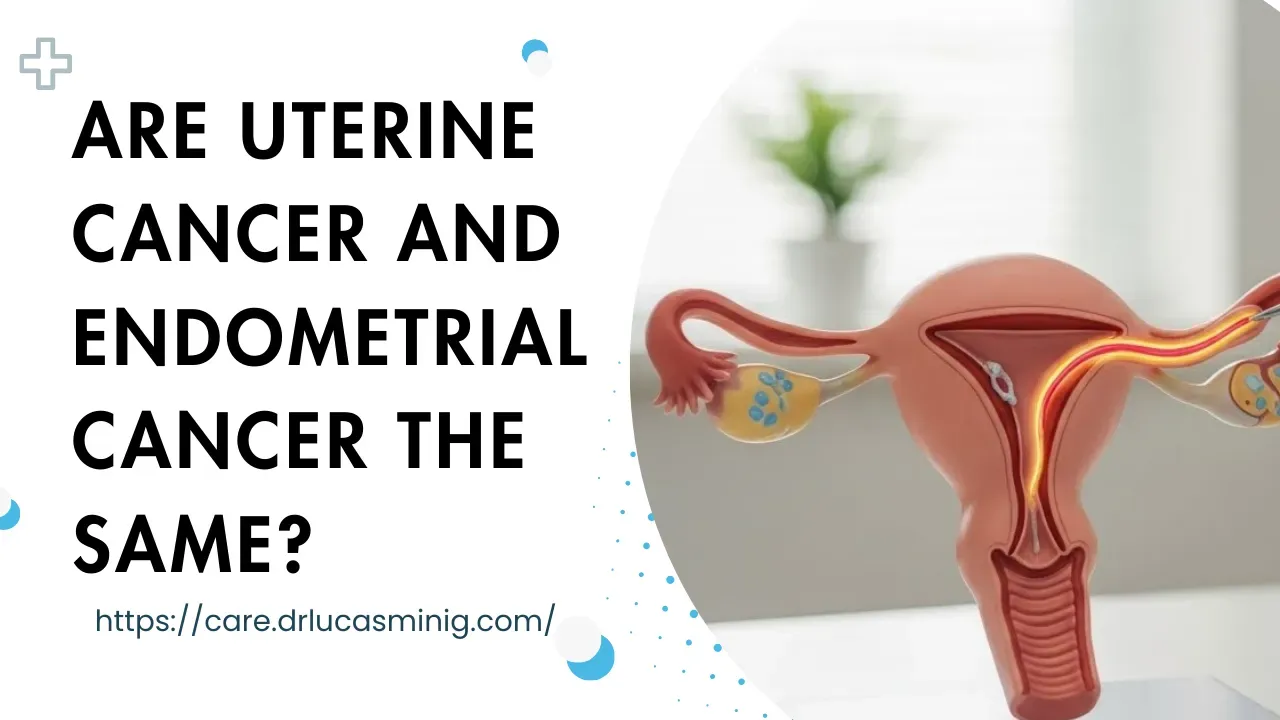
Dr. Lucas explains that “uterine cancer” is an umbrella term for cancers that start in the uterus (womb). The uterus has different parts, and cancer can begin in more than one of them. Endometrial cancer is a specific type of uterine cancer that starts in the endometrium, which is the inner lining of the uterus. Because endometrial cancer is the most common type, many people (and even some non-medical sources) casually say “uterine cancer” when they mean “endometrial cancer.”
Quick definition
- Uterine cancer: Any cancer that starts in the uterus (covers multiple types).
- Endometrial cancer: The most common uterine cancer, starts in the uterine lining.
What Is Uterine Cancer?
Uterine cancer is a type of cancer that starts in the uterus—the pear-shaped organ in the pelvis where a baby grows during pregnancy. Many people hear “uterine cancer” and assume it’s one single disease, but Dr. Lucas explains that uterine cancer is actually a general (umbrella) term for different cancers that can begin in different parts of the uterus.
Most uterine cancers start in the lining of the uterus, which is called the endometrium. That’s why you’ll often hear the term endometrial cancer, the most common form of uterine cancer. A less common type is uterine sarcoma, which begins in the muscle wall of the uterus or supporting tissues. These types can behave differently and may require different treatment approaches.
Types of Uterine Cancer
Dr. Lucas notes the two main categories include:
Endometrial Cancer (Most Common)
- Starts in the endometrium (uterine lining)
- Often shows early warning signs like abnormal bleeding
- Usually detected earlier because symptoms appear sooner
Uterine Sarcoma (Rare)
- Starts in the uterine muscle or other tissues
- Less common, may be more aggressive in some cases
- Symptoms can overlap, but diagnosis and treatment may differ
What is Endometrial Cancer?
Endometrial cancer is a type of cancer that starts in the endometrium—the inner lining of the uterus. The uterus (womb) is where a pregnancy develops, and the endometrium is the tissue that thickens each month during the menstrual cycle and sheds during a period. When cancer begins in this lining, it’s called endometrial cancer.
Dr. Lucas explains that endometrial cancer is the most common type of uterine cancer, which is why many people hear the term “uterine cancer” and assume it always means endometrial cancer. However, uterine cancer can also include rarer cancers (like uterine sarcoma) that start in the muscle wall of the uterus. Endometrial cancer specifically refers to cancer of the uterine lining.
Types of Uterine Cancer (Besides Endometrial)
When people say “uterine cancer,” they often mean endometrial cancer (cancer of the uterine lining). But Dr. Lucas explains that not all uterine cancers start in the lining. There are other, less common types of uterine cancer that can begin in the uterus’s muscle layer or supporting tissues. These are important to understand because they can behave differently and may need different treatment approaches.
Below are the main types of uterine cancer besides endometrial cancer.
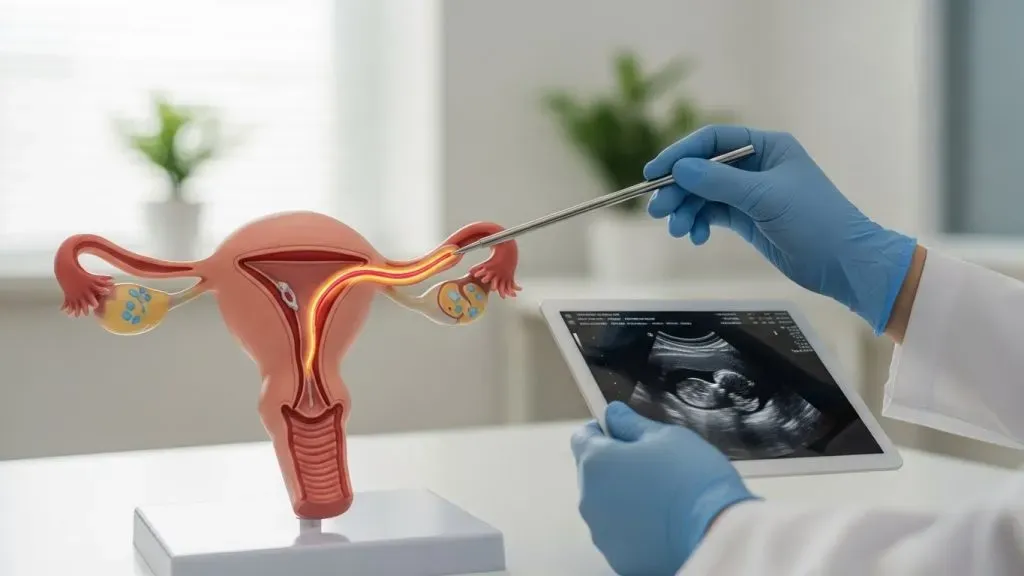
1) Uterine Sarcoma (Rare but Important)
Uterine sarcoma is a rare group of cancers that start in the muscle wall of the uterus (myometrium) or other tissues that support the uterus. Dr. Lucas notes that uterine sarcomas are much less common than endometrial cancer, but they may be more aggressive in some cases.
Common types of uterine sarcoma include:
A) Leiomyosarcoma (LMS)
- Starts in the smooth muscle of the uterus
- Can grow and spread more quickly than many endometrial cancers
- Sometimes mistaken for fibroids because both can form masses
Dr. Lucas explains that sudden growth of a uterine mass (especially after menopause) should be evaluated carefully.
B) Endometrial Stromal Sarcoma (ESS)
- Starts in the connective tissue that supports the endometrium
- Can be slow-growing (low-grade) or faster-growing (high-grade)
- May be hormone-sensitive in some cases
C) Undifferentiated Uterine Sarcoma
- Rare, tends to be more aggressive
- Cells look very abnormal under the microscope
2. Carcinosarcoma (Mixed Tumor)
Carcinosarcoma (sometimes called a malignant mixed Müllerian tumor) is a rare cancer that has features of both:
- Carcinoma (cells from lining/gland tissue)
- Sarcoma (cells from muscle/support tissue)
Dr. Lucas explains that carcinosarcoma is often treated more like a high-grade cancer because it can behave aggressively.
3. Cervical Cancer (Not “Uterine Cancer,” But Often Confused)
Some people mix up uterine cancer with cervical cancer because the cervix is part of the female reproductive system. However:
- Cervical cancer starts in the cervix, not the uterus
- It’s usually linked to HPV infection
- Screening and prevention are different (Pap test, HPV test, HPV vaccine)
Dr. Lucas emphasizes that cervical cancer is not classified as uterine cancer, but it’s a common point of confusion.
Symptoms: What Should You Watch For?
Recognizing symptoms early plays a crucial role in the timely diagnosis and successful treatment of many gynecologic conditions, including uterine and endometrial cancers. While symptoms can vary from person to person, there are several common warning signs you should not ignore.
Abnormal Vaginal Bleeding
The most common and noticeable symptom is abnormal vaginal bleeding. This may include bleeding after menopause, bleeding between periods, unusually heavy menstrual flow, or bleeding that lasts longer than normal. Any bleeding after menopause should always be evaluated by a healthcare professional.
Pelvic Pain or Pressure
Persistent pelvic pain, pressure, or discomfort that does not go away may be a sign of an underlying issue. Some women describe it as a feeling of fullness or heaviness in the lower abdomen.
Unusual Vaginal Discharge
Watery, bloody, or foul-smelling vaginal discharge, especially after menopause, can be an early warning sign and should not be overlooked.
Pain During Intercourse or Urination
Experiencing pain during sexual intercourse or discomfort while urinating may indicate that something is wrong, particularly if these symptoms are new or worsening.
Changes in Bladder or Bowel Habits
Frequent urination, difficulty emptying the bladder, constipation, or other unexplained changes in bowel or bladder habits may occur if a pelvic mass is affecting nearby organs.
Unexplained Weight Loss and Fatigue
Sudden weight loss without trying, ongoing fatigue, or general weakness can sometimes be associated with more advanced disease and should be medically assessed.
When to See a Doctor
If you notice any of these symptoms—especially persistent or postmenopausal bleeding—it’s important to consult a healthcare provider promptly. Early evaluation and diagnosis can significantly improve treatment outcomes and overall prognosis.
FAQ’s
Is endometrial cancer a type of uterine cancer?
Yes. Endometrial cancer is the most common type of uterine cancer. It starts in the endometrium (uterine lining). Dr. Lucas explains that “uterine cancer” is a broad term, and endometrial cancer falls under it.
Can uterine cancer be something other than endometrial cancer?
Yes. Uterine cancer can also be other types, especially uterine sarcoma, which starts in the muscle or supporting tissues of the uterus (not the lining). These are rarer but important.
What’s the biggest warning sign of endometrial cancer?
Abnormal vaginal bleeding is the biggest warning sign.
Most important: bleeding after menopause (even light spotting). Dr. Lucas advises getting any postmenopausal bleeding checked promptly.
Is uterine sarcoma the same as endometrial cancer?
No. They are different.
Endometrial cancer starts in the uterine lining
Uterine sarcoma starts in the uterine muscle or supportive tissue
They can have similar symptoms, but diagnosis and treatment may differ.
How is endometrial cancer detected?
Dr. Lucas explains it’s usually detected through a few key steps:
Pelvic exam (initial check)
Transvaginal ultrasound (TVUS) to assess the uterine lining
Endometrial biopsy (main test to confirm cancer)
If needed: Hysteroscopy and/or D&C for clearer sampling
If cancer is confirmed: imaging like MRI/CT for staging
Conclusion
So, are uterine cancer and endometrial cancer the same? Dr. Lucas explains that they’re related, but not identical. Endometrial cancer is the most common type of uterine cancer, because it starts in the endometrium (the uterine lining)—which is why many people use the terms interchangeably. However, uterine cancer is a broader term and can also include rarer cancers like uterine sarcoma, which begins in the muscle or supporting tissues of the uterus.
The most important takeaway is this: don’t ignore symptoms, especially abnormal bleeding—and particularly bleeding after menopause. If you notice unusual bleeding, persistent pelvic pain, or abnormal discharge, Dr. Lucas recommends getting evaluated early. Early diagnosis often leads to more effective treatment and better outcomes.